
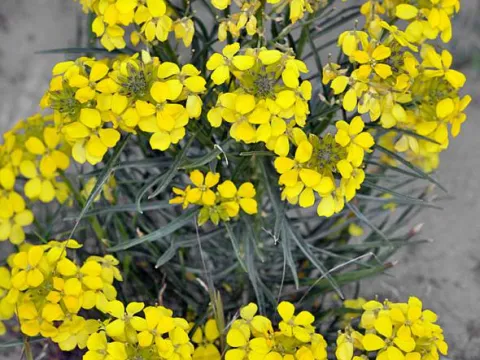
Western wallflower
Erysimum occidentale
The Western wallflower (Erysimum occidentale) belongs to the Brassicaceae family. It is a resilient herbaceous plant recognized for its ecological adaptability and specific chemical profile.
What the section contains
Western wallflower
The plant thrives in well-drained, sandy-loam soils. It prefers soils with a near-neutral pH, avoiding waterlogged environments which can cause physiological disorders.
Climatically, it is suited to temperate regions, displaying excellent drought tolerance once established. It requires full sunlight to optimize its vegetative development.
Agrotechnical management involves regular weeding in the early stages of growth to reduce nutrient competition from opportunistic weeds.
Adequate space between rows should be maintained to ensure proper airflow, reducing the risk of fungal infections within the dense foliage canopy.
Crucifer flea beetles are the primary pests affecting young seedlings, potentially causing significant stand reduction if left unmonitored during the initial growth phase.
Clubroot is a major soil-borne threat that can persist in the field, necessitating strict crop rotation schedules with non-cruciferous species.
Aphids can colonize the flowering stems, negatively impacting the plant's ability to produce robust seeds and reducing overall yield quality.
Fungal diseases like downy mildew may appear in seasons with high relative humidity, requiring fungicide intervention or improved canopy management.
Integrated Pest Management (IPM) strategies are recommended, utilizing beneficial insects to control aphid populations naturally.
Harvesting for medicinal purposes occurs during the peak flowering stage to ensure the highest concentration of active therapeutic compounds.
Manual or mechanical harvesting methods are employed, cutting the top portion of the plant while ensuring the root crown remains undisturbed.
Post-harvest handling requires immediate moisture reduction. Drying in shaded, ventilated areas prevents the degradation of chemical constituents.
Seed harvesting is conducted when seed pods turn from green to light brown, minimizing the risk of shattering during the transport process.
Final storage conditions must be controlled for temperature and humidity to prevent mold growth and maintain long-term seed viability.