
White arctic whitlow-grass
Draba lactea
Description
Growing requirements
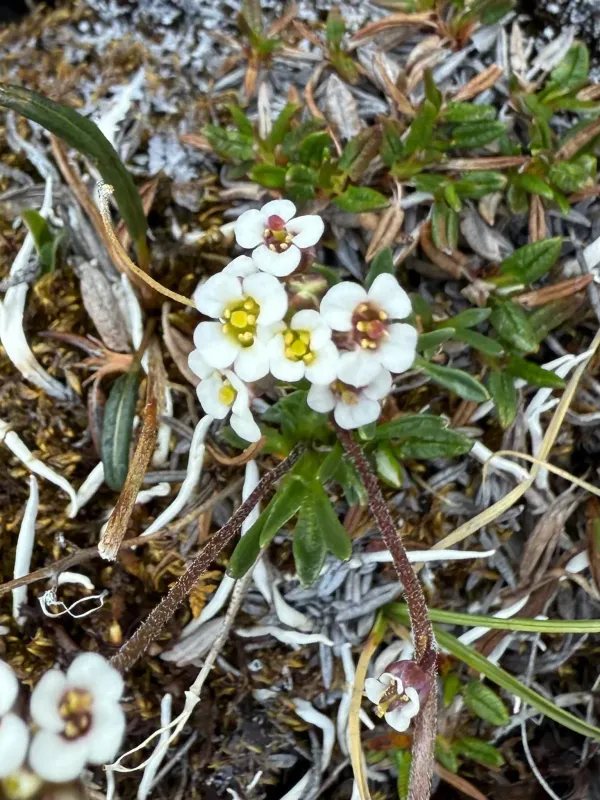
Draba lactea, commonly known as white arctic whitlow-grass, is a perennial herbaceous plant belonging to the Brassicaceae family. It is a highly specialized species endemic to circumpolar regions, thriving in some of the harshest environments on Earth.
The distribution of this species spans the Arctic regions of North America, Europe, and Asia. It is frequently found in rocky habitats, tundra heaths, and along the margins of glaciers where competition from other vegetation is minimal.
From an agronomical perspective, Draba lactea is not classified as a commercial crop. However, it is a significant subject of interest for plant breeders looking to identify genes associated with extreme cold tolerance and physiological adaptation to cryic soil conditions.
The soil requirements for this species focus on excellent drainage and a low nutrient profile. It prefers rocky or gravelly substrates that prevent waterlogging, as the species is highly susceptible to root decay in poorly aerated or water-saturated soils.
Its life history is adapted to the brief Arctic growing season. The plant exhibits rapid phenological development, ensuring that reproduction is completed within a very narrow window of time before the return of freezing temperatures and snow cover.