
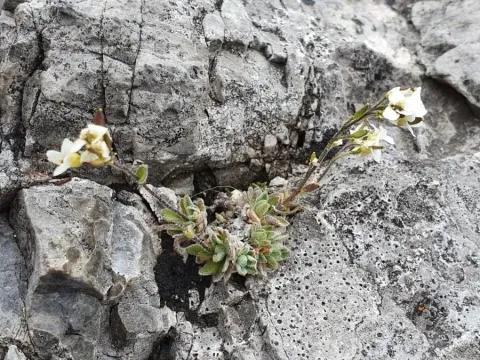
Woolly whitlow-grass
Draba tomentosa
Woolly whitlow-grass (Draba tomentosa) is a perennial herbaceous plant belonging to the Brassicaceae family. It is naturally distributed in the alpine and subalpine regions of Europe, thriving in rocky and mountainous terrains.
What the section contains
Woolly whitlow-grass
The plant is botanically distinguished by its dense, grayish-white indumentum or 'woolly' hairs covering the leaves. This adaptation serves to protect the plant from harsh winds, intense sunlight, and moisture loss in its native high-altitude habitat.
For successful cultivation, this species requires very specific soil conditions. It demands sharp drainage and thrives best in gritty, rocky, or limestone-based soils. Heavy or clay-rich soils are usually fatal to the root system due to water stagnation.
Regarding climate, Draba tomentosa requires full sun exposure and excellent air circulation. It is well-suited to cold-climate gardening but struggles significantly in regions with hot, humid summers, which often lead to physiological decline.
In terms of usage, it is highly valued by rock garden enthusiasts. Its compact, cushion-forming habit makes it an excellent choice for crevice planting, gravel gardens, and troughs where it can form small, long-lived colonies.
The most significant threat to woolly whitlow-grass is root and crown rot caused by excess moisture. During humid periods, water pooling at the base of the plant can rapidly lead to fungal infections and tissue decay.
Common agricultural pests, particularly flea beetles and aphids, may occasionally attack the foliage, especially in late spring. While these infestations are rarely fatal, they can severely weaken the plant and reduce its bloom potential.
Cultural control is the most effective management strategy. Using a thick top dressing of grit or gravel around the neck of the plant keeps the foliage dry and prevents direct contact with damp soil.
Fungal issues should be managed using systemic fungicides if cultural improvements fail to stop the spread. Early detection of yellowing or mushy leaves is critical to saving the specimen.
Maintaining a clean growing area by removing encroaching weeds and debris is essential for plant health. Providing proper spacing prevents humidity buildup and keeps the plant vibrant during its active growth phase.