
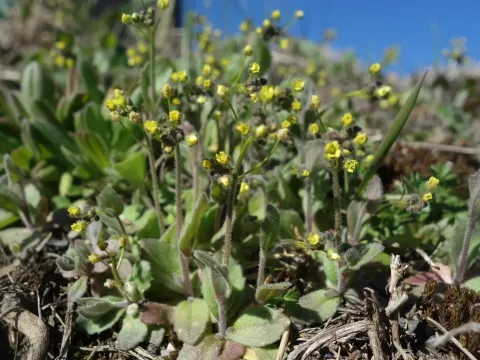
Yellow whitlow-grass
Draba nemorosa
Yellow whitlow-grass (Draba nemorosa) is a small annual herbaceous plant belonging to the Brassicaceae family. In agricultural settings, it is primarily categorized as a weed that exhibits significant vitality during the early spring growth phase.
What the section contains
Yellow whitlow-grass
The lifecycle of this plant is remarkably short, allowing it to complete its reproductive cycle before the main competition from cereal crops begins. This strategy makes it a persistent presence in fields where early-season soil management is limited.
Seeds of Draba nemorosa germinate rapidly under cool and moist conditions, forming a basal rosette that remains close to the ground. This initial development stage is critical for the plant to establish itself before the canopy closure of crops.
Once the temperatures rise, the plant sends up a flowering stem that produces numerous small yellow flowers. The high seed production per plant ensures a consistent seed bank in the topsoil layer, facilitating regrowth in subsequent seasons.
Strategic tillage and timely cultivation are essential for disrupting the lifecycle of this species. By managing the soil surface before seed maturation occurs, farmers can effectively reduce the local population of yellow whitlow-grass.
The plant thrives in open, sunny environments where soil moisture is adequate during the early stages of growth. It is often found in disturbed habitats, such as fallow fields, road edges, and thin crop stands.
Regarding soil preferences, Draba nemorosa is adaptable to a variety of substrates, including sandy and loamy soils. It does not require high levels of soil fertility, often outcompeting other species in nutrient-poor environments.
Climatic adaptability is one of the key strengths of this species, as it is resistant to late spring frosts. It prefers temperate zones where spring rainfall provides sufficient moisture for early vegetative development.
Although it can tolerate short-term drought, the plant's overall size and biomass production are heavily dependent on spring precipitation. In extremely dry years, the plant may reach maturity at a much smaller size while still producing viable seeds.
Competition for light is the most significant limiting factor for its growth. Dense crop canopies significantly inhibit its photosynthetic activity, which is why maintaining optimal crop density is a recommended cultural practice for suppression.
As a member of the Brassicaceae family, yellow whitlow-grass can act as an alternative host for various pests that damage economically important crops like oilseed rape or mustard. This makes it a potential phytosanitary risk.
The plant can harbor pathogens such as downy mildew or various fungal infections that impact cruciferous vegetables and oilseeds. Continuous monitoring of field borders is necessary to identify potential pathogen reservoirs.
Insect pests, specifically crucifer flea beetles, utilize this plant for early-season feeding and breeding. As the weed dries up or is treated, these insects often migrate directly into nearby sensitive crops, causing significant economic damage.
Chemical management involves the use of selective herbicides applied during the early rosette stage of the weed. It is vital to time these applications correctly to ensure effectiveness while minimizing the risk to the primary crop.
Integrated weed management, including crop rotation and the use of clean, certified seeds, is the most sustainable approach. Keeping machinery clean between fields also prevents the dispersal of seeds into unaffected areas of the farm.