
Wavy bittercress
Cardamine flexuosa
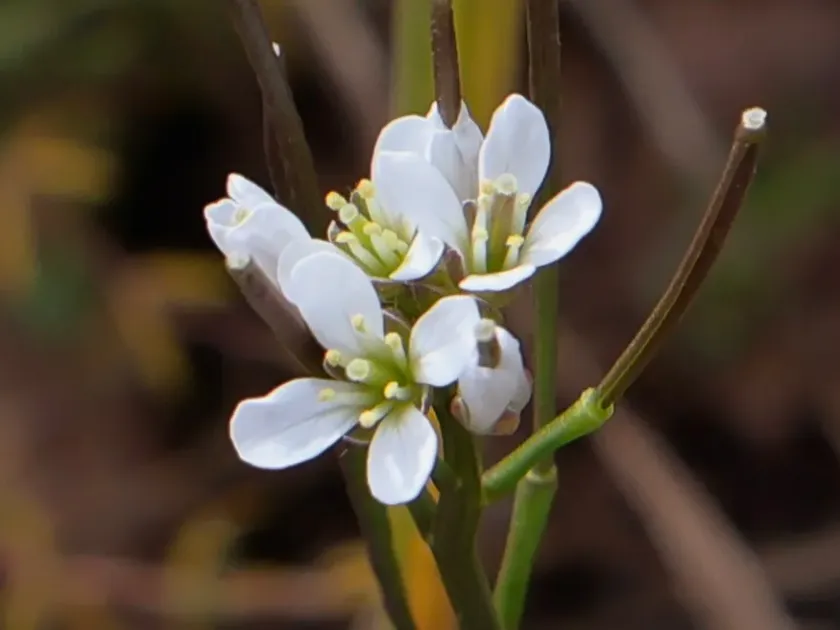
Description
Sowing dates
Wavy bittercress is a member of the Brassicaceae family. It is often recognized as a small, winter-annual or biennial herb that thrives in diverse agricultural and garden environments.
The life cycle begins with seed germination during cool, moist periods. In agricultural settings, it often emerges alongside early spring crops, utilizing available moisture.
Seed production is prolific, and the plants possess an efficient dispersal mechanism, which allows them to colonize disturbed soil rapidly after cultivation operations.
For research or cultivation purposes, sowing should take place in early spring or autumn to match the plant's natural preference for cooler temperatures.
The seeds are capable of germinating over a wide range of conditions, making the plant a persistent presence in areas with stable moisture levels throughout the season.
Growing requirements
This plant prefers moist, fertile, and well-drained soils. It is commonly found in shaded or semi-shaded areas, as it does not perform well in direct, scorching summer sun.
The ideal soil reaction is neutral to slightly acidic, rich in organic matter, which supports the rapid vegetative growth characteristic of this species.
Climate requirements involve moderate temperatures, as the plant is not highly drought-tolerant. Consistent moisture is essential for its survival and proliferation.
Proper agricultural management involves regular weeding and soil aeration to prevent the establishment of dense populations in vegetable fields or nursery areas.
The species is highly adaptable to variations in soil composition but shows a clear preference for areas with high nutrient availability and low competition from larger species.
Main diseases and pests
Like other Brassicaceae members, wavy bittercress is vulnerable to flea beetles, which can cause significant defoliation during the early growth stages.
Aphid infestations are common, particularly in sheltered or humid environments, leading to distorted growth and reduced seed production efficiency.
Fungal pathogens such as powdery mildew can affect the leaves, especially when plant density is high and airflow is restricted within the crop canopy.
Root rot can occur in over-watered soils, providing a potential opening for secondary infections that can weaken or kill the plant population.
Integrated pest management strategies are recommended to keep the population within control limits, focusing on cultural practices such as crop rotation and inter-row cultivation.