
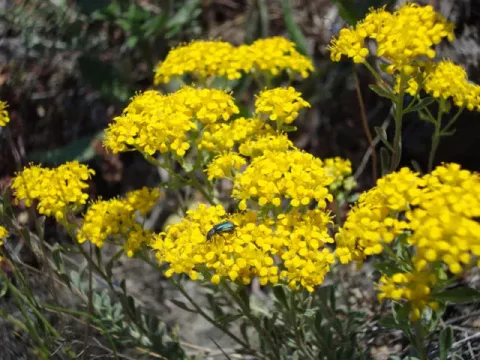
Wedge-leaved madwort
Alyssum cuneifolium
The wedge-leaved madwort, scientifically known as Alyssum cuneifolium, is a resilient perennial member of the Brassicaceae family, well-adapted to rocky environments.
What the section contains
Wedge-leaved madwort
The ideal time for sowing seeds in a controlled environment is early spring, ensuring that the soil temperature is stable for germination.
Seeds are best sown on the surface of the growing medium, as they require sufficient light to break dormancy and sprout effectively.
Professional nurseries often utilize trays for seedling production, providing a light, sterile substrate to prevent damping-off diseases during the early stages.
Direct outdoor sowing is recommended only in regions with well-draining soils and stable climates to avoid seed rot during excessive rain spells.
This species thrives in well-drained, gritty, or sandy soils where water does not accumulate, as it is highly susceptible to root decay in damp conditions.
Full sun exposure is a primary requirement for the wedge-leaved madwort; shading inhibits its growth and significantly reduces the intensity of flowering.
It is exceptionally drought-tolerant once established, requiring minimal irrigation even during the peak of the dry summer season.
Soil pH levels should remain neutral or slightly alkaline, reflecting the plant's natural adaptation to limestone-based high-altitude habitats.
Regular maintenance involves keeping the area free of competing weeds, which can quickly overwhelm this slow-growing and compact plant species.
Fungal diseases, particularly those affecting the roots and collar area, are the most significant threats to the overall survival of the plant.
Powdery mildew can occur in stagnant air conditions, requiring immediate spacing adjustments and the application of suitable fungicidal treatments.
Crucifer flea beetles are common pests that target the foliage, causing small holes and reducing the aesthetic appeal of the perennial.
Root rot is almost exclusively caused by poor drainage, emphasizing the need for a rock-based substrate in both garden and greenhouse settings.
Integrated pest management, including regular monitoring and manual removal of affected leaves, is highly recommended to sustain plant health over time.