
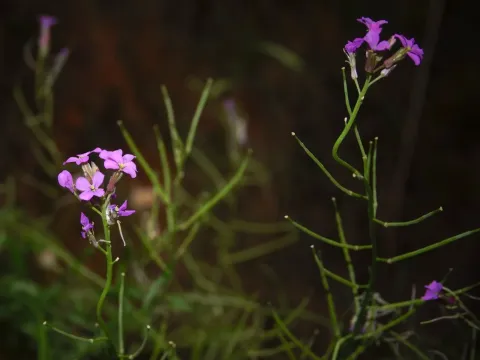
Erysimum lagascae
Erysimum lagascae
Erysimum lagascae is a member of the Brassicaceae family, recognized for its potential as an industrial oilseed crop. It is highly valued for the specific fatty acid profile found in its seeds, making it a subject of interest for modern agriculture.
What the section contains
Erysimum lagascae
Sowing occurs in the spring, once the soil has warmed sufficiently to ensure rapid and uniform germination. The crop exhibits strong initial growth vigor, which helps it establish quickly in the field.
The standard seeding method involves rows that allow for efficient weed management during the early vegetative stages. Seed depth is typically kept shallow, ranging from 1 to 2 centimeters to ensure adequate moisture contact without burying the seed too deeply.
Uniform seed distribution is essential to maintain an optimal plant density. Proper spacing helps minimize competition for sunlight and nutrients, promoting uniform maturation of the seed pods across the entire field.
Successful establishment depends on maintaining soil moisture levels during the planting phase. While the plant is drought-tolerant once established, favorable conditions in the first few weeks are crucial for high-quality stand development.
This crop thrives in well-drained, sandy loam to loamy soils. Good aeration is critical, as the roots are sensitive to waterlogging and soil compaction, which can severely hinder the plant's overall development.
Being a sun-loving plant, Erysimum lagascae requires full exposure to sunlight throughout its growing season. Shaded areas should be avoided, as they negatively impact both vegetative growth and oil accumulation in the seeds.
The plant demonstrates a remarkable adaptation to temperature fluctuations, making it suitable for various temperate climates. It handles moderate heat well but prefers mild conditions during the flowering phase for optimal pollination.
Soil fertility management should focus on balanced NPK ratios. Excessive nitrogen application should be avoided, as it can lead to lodging and lower the overall oil content of the harvested seed.
Crop rotation is a fundamental agronomic requirement. It is recommended to include this crop in a sequence that avoids other Brassicaceae species to prevent the buildup of soil-borne diseases specific to the family.
The primary economic value of Erysimum lagascae lies in its oil content. The oil is rich in erucic acid, which is highly sought after for industrial applications, including the production of specialized lubricants and biodiesel.
The stability of the oil makes it an excellent raw material for chemical manufacturing. It serves as a sustainable alternative to fossil-fuel-based components in various technical processes.
Yield potential is closely linked to agronomic management and weather conditions. Proper attention to field maintenance and harvest timing ensures a steady supply of high-quality raw material for industrial processing.
The byproduct of oil extraction, the seed cake, can be repurposed for industrial use, potentially adding value to the supply chain. This encourages a more efficient and sustainable approach to industrial oilseed production.
Continued genetic improvement and selection efforts aim to enhance oil yield per hectare, making Erysimum lagascae an increasingly competitive crop in the global market for industrial oils.
The crop is susceptible to typical Brassicaceae pests, such as flea beetles and pollen beetles. These insects can cause significant damage to early growth stages and the reproductive parts of the plant during flowering.
Fungal diseases like downy mildew and alternaria can occur under humid conditions. Maintaining good field hygiene and avoiding overcrowded plantings are effective preventative strategies against such infections.
The presence of weeds within the Brassicaceae family acts as a bridge for pests and diseases. Eliminating these weeds from the field borders and surrounding areas is a critical step in integrated pest management.
Regular field scouting is recommended to identify threats early. Integrated management practices, combining cultural controls with targeted, environmentally friendly chemical applications, are preferred over broad-spectrum interventions.
Adherence to recommended crop rotation cycles is the most effective long-term strategy for preventing the accumulation of specialized pathogens that thrive in the presence of Erysimum lagascae.
Harvesting should take place when the pods are fully mature and dry, indicating that the seeds have reached maximum oil content. Monitoring pod color is the primary indicator for determining the ideal harvest window.
Direct combining is the standard harvesting method. Settings must be carefully adjusted to handle the small seeds, ensuring minimal loss and avoiding physical damage to the seed coat during the threshing process.
If maturation is uneven across the field, desiccation can be utilized to synchronize the drying of the crop. This allows for a more efficient harvest operation and ensures higher overall seed quality.
Post-harvest handling requires prompt cleaning and drying to reach a moisture content suitable for storage. Keeping moisture levels below 9 percent is essential to prevent heating and fungal growth in the silos.
Storage facilities should be cool, dry, and well-ventilated to maintain the integrity of the oil. Careful management during storage preserves the quality of the raw material, ensuring its suitability for industrial extraction.