
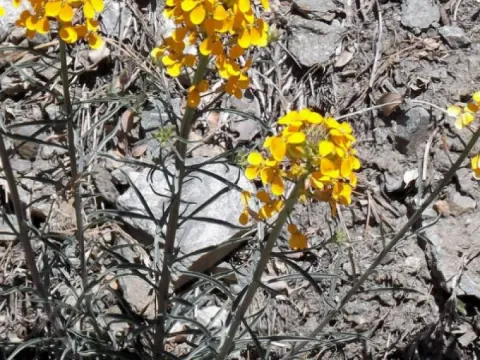
Erysimum hybrids
Erysimum hybrids
Erysimum hybrids, belonging to the Brassicaceae family, are mainly cultivated as industrial crops to provide raw materials for the pharmaceutical sector. This biennial or perennial plant requires careful preparation of the field to ensure high yields.
What the section contains
Erysimum hybrids
The optimal sowing time is early spring, once soil temperatures stabilize above 5 degrees Celsius. Autumn sowing is also a viable option in milder climates, as it allows for better establishment of the root system before the heat of summer.
A seed rate of 2–3 kg per hectare is standard. Precision seeding is critical due to the small size of the seeds; a sowing depth of 1–2 cm is recommended to ensure they receive sufficient moisture for germination.
Rows should be spaced approximately 45 cm apart to facilitate mechanical weeding and ensure that the plants have enough space for healthy vegetative development. Proper spacing is essential to minimize intra-crop competition.
Seedlings typically emerge within two weeks. During this early stage, the crop is vulnerable, so maintaining a loose, weed-free seedbed is necessary to provide the plants with a competitive advantage.
This crop thrives in well-lit environments. Full sun exposure is mandatory for the synthesis of bioactive compounds, particularly cardiac glycosides, which define the plant's medicinal value.
Erysimum hybrids prefer light, sandy loam soils with a neutral or slightly alkaline pH. Good soil structure and permeability are vital, as the plant does not tolerate waterlogging or compacted soils.
Although it exhibits good drought tolerance due to a strong taproot, supplemental irrigation during the peak growing season can significantly increase the total biomass and chemical content of the harvest.
The plant performs best in temperate climates. It is highly resilient to cold and frost but may suffer from physiological stress if exposed to extreme heat waves and dry winds for extended periods.
Balanced fertilization is key. High nitrogen levels should be avoided, as they prioritize leafy growth at the expense of the desired secondary metabolites. Phosphorous and potassium inputs are preferred for healthy development.
The yield of dry biomass for Erysimum hybrids generally ranges from 15 to 20 quintals per hectare. Achieving these figures requires rigorous adherence to technical agricultural standards and crop rotation.
The concentration of pharmaceutical-grade active ingredients is highest during the mass flowering stage. Monitoring this phase is crucial, as harvesting at the incorrect time significantly alters the quality profile of the raw material.
Efficient crop management includes maintaining the field for 2–3 seasons before plowing. Continuous cultivation on the same plot for too long can lead to soil exhaustion and an increase in specific soil-borne pathogens.
Harvesting efficiency is improved by selecting uniform sites with minimal slope, which facilitates the operation of mechanical harvesters. Proper field preparation leads to higher-quality raw products.
Economic viability is highly dependent on the quality of the raw material, which is strictly monitored by the buyers in the pharmaceutical industry to ensure consistent production of medicine.
Flea beetles are the most frequent pests, particularly in the spring when seedlings are developing their first true leaves. Preventive monitoring is essential for timely intervention.
Aphids pose a major risk as they suck sap from developing shoots, causing distortion and potentially transmitting viral infections that can weaken the entire stand.
Fungal diseases, such as downy mildew, occur frequently in high-humidity conditions or when planting density is too high, preventing adequate airflow between the rows.
Effective control measures include crop rotation and the removal of plant debris after the harvest. Integrated pest management strategies are encouraged to minimize reliance on synthetic chemical treatments.
Strict observance of pre-harvest intervals is required if pesticides are used, as pharmacological raw materials are subject to stringent residue testing protocols before they can be processed.
Mechanical harvesting via mowing is the standard method used during the peak bloom phase. The cut material must be handled carefully to avoid contamination with soil or other organic pollutants.
Timely transport to the drying facility is vital to prevent the crop from fermenting. Fermentation processes can lead to the rapid degradation of active ingredients, rendering the product useless for medicine.
Drying should take place in controlled environments at temperatures between 40 and 45 degrees Celsius. This temperature range is optimal for removing moisture without causing heat damage to the chemical structure.
Once dried, the biomass is cleaned and packaged. The final product should be uniform, retaining its characteristic bitter aroma, which indicates the preservation of its medicinal properties.
Storage must be in a cool, dark, and well-ventilated warehouse to prevent mold growth and maintain the potency of the herb over the required shelf life.