
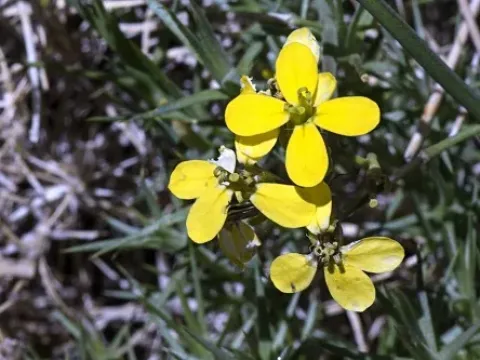
Erysimum myriophyllum
Erysimum myriophyllum
Erysimum myriophyllum is a rare herbaceous plant species belonging to the Brassicaceae family. In the wild, it predominantly grows in arid climates, which dictates its biological development cycles.
What the section contains
Erysimum myriophyllum
Sowing should ideally be carried out in the spring when soil temperatures reach 10–12 degrees Celsius. It is crucial to maintain an optimal seeding depth, which for this species' small seeds should not exceed 1–2 centimeters.
To ensure uniform germination, the soil must be well-prepared and cleared of any weeds. Using light tillage implements allows for the creation of an ideal seedbed structure.
In industrial cultivation, row cropping is the preferred method. This allows for mechanization of inter-row cultivation and fertilizer application throughout the vegetative season.
Autumn sowing is only recommended in regions with mild winters, as seedlings are sensitive to severe frost during the cotyledon stage.
The crop has high light requirements, as it is a sun-loving plant. Shading in the field leads to stem elongation and a decrease in the concentration of biologically active compounds in the aerial parts.
Well-drained sandy or light loamy soils are ideal for growth. Erysimum is highly sensitive to waterlogging in the root zone, which can lead to root rot.
The optimal pH range for the soil solution is neutral to slightly alkaline. In acidic soils, liming is required before the main land preparation takes place.
The plant demonstrates high drought resistance due to its root system structure. However, sufficient moisture is necessary during the first half of the summer to maximize vegetative mass production.
Mineral nutrition should be balanced with a focus on phosphorus and potassium fertilizers. Excess nitrogen promotes excessive leaf growth but negatively impacts the quality of the medicinal raw material.
The yield of Erysimum myriophyllum green mass depends on plant density and the overall agricultural management. On average, standard harvest metrics can be expected when following established technologies.
The main productivity indicator is the yield of dried medicinal raw material, which is about 25-30% of the fresh plant mass. Harvesting is carried out during the peak flowering phase.
Maximum productivity is achieved in the second year of vegetation, provided there was successful wintering. In subsequent years, yields may decline due to the depletion of soil nutrients.
Regular application of organic fertilizers between the rows helps extend the plant's productive longevity. It is important to monitor the health of the plants after every cut.
The total yield also depends on the quality of the seed stock and the absence of competition from weeds, which can suppress the development of slow-growing seedlings.
The most dangerous disease for the crop is downy mildew, which affects leaves during periods of high humidity. Modern systemic fungicides are used for control.
Root rot poses a serious threat during periods of soil saturation. Disease prevention is based on strict irrigation management and improving soil aeration in the root layer.
Among the pests, flea beetles cause the most damage. They actively feed on cotyledons and young leaves, which can lead to the total loss of the crop during the initial growth stage.
In the spring, cabbage white butterfly caterpillars pose a threat as they can quickly consume leaf blades. Pest population monitoring should be conducted weekly throughout the season.
To minimize chemical inputs, it is recommended to use biological protection methods and adhere to a crop rotation schedule, avoiding replanting on the same site for at least 4-5 years.
Harvesting Erysimum myriophyllum requires strict adherence to timing to maintain the maximum concentration of active glycosides. The optimal phase is full flowering.
Mowing is performed in the morning after the dew has evaporated, using mowers set to a minimal cutting height. Soil contamination in the harvested mass must be avoided.
Immediately after harvesting, the raw material is dried in well-ventilated areas or specialized drying facilities at temperatures not exceeding 45 degrees Celsius.
During the drying process, direct sunlight must be avoided, as it degrades the valuable organic compounds contained in the plant.
Once dried, the product is cleaned of impurities and packed in airtight containers for further processing or sale to pharmaceutical companies.