
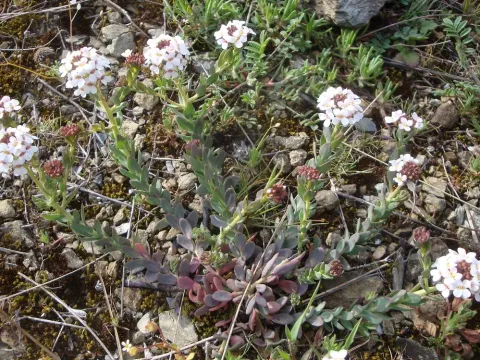
Erysimum pectinatum
Erysimum pectinatum
Erysimum pectinatum is a perennial herbaceous plant belonging to the Brassicaceae family. In agricultural practice, seeds are typically sown in late autumn or early spring, as soon as the soil temperature allows for active germination.
What the section contains
Erysimum pectinatum
Before sowing, the field must be thoroughly prepared by tilling to create a fine tilth. Because the seeds are very small, they should be sown at a shallow depth of 1 to 1.5 centimeters to ensure optimal contact with the soil and prevent deep burial.
Row cropping is the preferred method for large-scale production, with row spacing between 45 and 60 centimeters. This layout facilitates mechanical weeding and cultivation, which are critical during the first year of crop establishment.
During the establishment phase, the plant invests energy into developing a robust taproot and a rosette of leaves. Growers should monitor the field closely during the first few weeks to ensure that seedling density is consistent throughout the rows.
The plant demonstrates good adaptability to various soil types, provided that the initial germination environment is free of crusting. Using high-quality, certified seeds is recommended to maximize the chances of a uniform and healthy crop stand.
Erysimum pectinatum thrives in open, sunny locations. Exposure to direct sunlight is essential for the plant to develop the necessary phytochemical profile required for its utilization in industry or pharmacology.
The crop prefers well-drained, sandy loam or loamy soils with a neutral pH. It is highly sensitive to waterlogged conditions, so selecting fields with excellent drainage is crucial for preventing root rot and ensuring plant longevity.
While the species is relatively drought-tolerant once established, providing supplemental irrigation during prolonged dry spells—especially during the peak flowering stage—will significantly improve the biomass yield.
Nutrient requirements are moderate. A balanced application of phosphorus and potassium fertilizers during soil preparation provides a solid foundation for plant health, whereas nitrogen should be used sparingly to avoid over-succulence.
The plant exhibits good winter hardiness, allowing it to overwinter successfully in most temperate climates. Ensuring that the soil remains well-aerated during the rainy season is just as important as preventing moisture stress during the summer.
Flea beetles are the most common pests that pose a threat to Erysimum pectinatum, particularly during the seedling stage. They can cause significant damage to young leaves, potentially compromising the survival of the plant.
Fungal pathogens such as downy mildew can become an issue if the planting density is too high or if ventilation within the canopy is poor. Promoting airflow by optimizing row spacing and managing weeds is a vital cultural control practice.
For pest management, an integrated approach is recommended, prioritizing biological controls over broad-spectrum chemicals whenever possible to maintain the quality of the harvested biomass.
Aphids may occasionally infest the plants, particularly during warm and dry periods. If the infestation reaches economic thresholds, targeted applications of approved insecticides should be performed while avoiding harm to pollinators.
Crop rotation is the most effective strategy for preventing the buildup of soil-borne pathogens. Avoid planting Erysimum pectinatum in fields that have recently hosted other members of the Brassicaceae family.
Harvesting should be timed precisely with the period of mass flowering. During this stage, the plant reaches its peak concentration of active compounds, making it the ideal window for collecting the aerial parts.
The stems are typically cut at approximately 15 centimeters above the ground. Leaving a portion of the plant base intact encourages regrowth, which can be beneficial if the crop is intended for multiple harvests over several seasons.
Immediate post-harvest handling is critical to ensure quality. The green biomass should be transported to a drying facility as quickly as possible to prevent fermentation or chemical degradation caused by heat accumulation in heaps.
Drying is performed in specialized, well-ventilated sheds or dryers at temperatures strictly maintained below 45 degrees Celsius. This ensures the preservation of volatile components and natural pigments, which are key quality indicators.
Once dried to the appropriate moisture content, the product should be stored in breathable, dry conditions away from direct sunlight. Proper storage ensures that the crop maintains its efficacy and value for up to two years.