
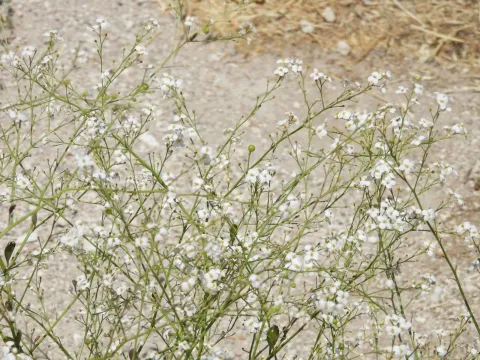
Oriental sea kale
Crambe orientalis
Oriental sea kale (Crambe orientalis) is a perennial herbaceous plant belonging to the Brassicaceae family. Sowing is typically carried out in late autumn or early spring, as soon as the soil reaches the necessary tilth for proper seed germination.
What the section contains
Oriental sea kale
The seeds require consistent soil moisture and moderate temperatures to break dormancy and ensure uniform emergence. A planting depth of 2 to 3 centimeters is considered ideal for field-scale production to protect the seeds from surface drying.
Thorough soil preparation, including deep plowing and leveling, is essential because the crop develops a substantial taproot system. Compacted soil layers will significantly hinder the development of the plant and reduce final harvest quality.
Seedlings can be started in trays for transplantation, which ensures a more consistent plant density. However, due to the taproot's sensitivity to disturbance, direct seeding remains the preferred method for most commercial operations.
Plant spacing should be carefully calculated to accommodate the large leaf rosettes that develop in the second and third years. Proper spacing also facilitates mechanical weed control and ensures adequate airflow throughout the canopy.
This crop is recognized for its relative drought tolerance and cold hardiness, making it suitable for cultivation in various steppe and semi-arid regions. It thrives in well-drained, fertile soils with a neutral or slightly alkaline pH.
Waterlogging and poor drainage are detrimental to the plant, often causing root rot and overall decline. It is critical to select sites with good natural water infiltration to support the health of the taproots over several years.
The crop requires full sun exposure for optimal growth. Shaded environments negatively impact the photosynthetic activity of the leaf rosettes, leading to stunted root development and a lower concentration of secondary metabolites.
An ideal temperature range for Crambe orientalis is between +18 and +25 degrees Celsius. While it can withstand temperature fluctuations, consistent warmth during the growing season maximizes the vegetative growth rate.
Early-stage weed management is mandatory as the plant establishes itself slowly. Effective weed control ensures that the crop is not outcompeted by more aggressive invasive weeds during the first year of its life cycle.
Yield production for Oriental sea kale increases over the first three years of the plantation life cycle. The harvest usually involves gathering the roots or aerial biomass depending on the intended commercial application.
Under optimal management practices and appropriate soil conditions, yields of 150 to 250 quintals per hectare can be expected. Product quality is highly dependent on the timely harvest and the specific biochemical content of the roots.
Fertilization with balanced nitrogen, phosphorus, and potassium levels is necessary to maximize root biomass. Organic amendments incorporated before planting help maintain long-term soil fertility and structure.
The plantation typically remains productive for up to three or four years. After this period, root size often decreases, and the risk of pathogen buildup in the soil increases, necessitating crop rotation to maintain efficiency.
Harvesting requires specialized equipment to extract the roots deep from the soil without breakage. Using root lifters or modified plow shares ensures that the harvest remains intact and of the highest possible commercial quality.
Common pests include flea beetles, which can cause severe damage to the young seedlings during the spring. Early detection and intervention are necessary to prevent the loss of significant portions of the crop stand.
Cabbage root flies are another major threat, as their larvae burrow into the root system, causing plant wilting and potentially inviting secondary bacterial or fungal infections that lead to total plant loss.
Disease pressure, including clubroot and various forms of soft rot, is highest in fields with high moisture or acidic soils. Maintaining proper soil pH and implementing a rigid rotation schedule are the primary preventive measures.
Field monitoring should be consistent throughout the growing season. Integrated pest management (IPM) strategies, including the use of approved insecticides and fungicides, should be applied only when threshold levels are exceeded.
Sanitation is key to minimizing disease. Removing wild cruciferous weeds from the perimeter of the fields is essential to eliminate reservoirs for pests and pathogens that could otherwise migrate to the main crop.