
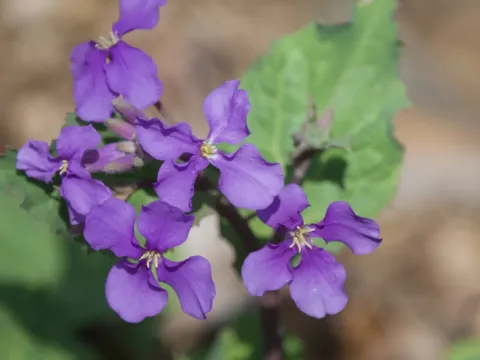
Orychophragmus
Orychophragmus
Orychophragmus is an annual or biennial herbaceous plant belonging to the Brassicaceae family, native to East Asia. The optimal time for sowing is autumn, as the plant is highly cold-tolerant and capable of overwintering in the rosette stage.
What the section contains

Orychophragmus
Spring sowing is possible in northern regions with temperate climates, although autumn planting allows the plants to establish better root systems and build significant vegetative mass before rapid growth begins. Orychophragmus is very undemanding and adapts quickly to various sowing schedules, provided there is adequate soil moisture.
Sowing is performed in rows with a spacing of approximately 20–30 centimeters, ensuring optimal plant density. The seeding depth should not exceed 1–2 centimeters, considering the small seed size and the need for rapid emergence.
To achieve maximum biomass, it is important to follow seeding rates, which range from 5 to 8 kilograms per hectare, depending on the intended use—either for seed production or as a green manure crop. Even distribution of seeds across the field is a key factor for uniform sprouting.
During the germination period, the crop requires stable soil moisture; therefore, light irrigation after sowing is recommended if rainfall is scarce. This ensures high germination vigor and the development of a healthy root system.
Orychophragmus is characterized by high ecological plasticity and the ability to grow in various soil types, including loamy and slightly acidic soils. The best results are observed in well-drained areas with a high content of organic matter.
The crop has moderate climate requirements, exhibiting exceptional winter hardiness and resistance to late spring frosts. The plant can withstand temperatures down to minus 10 degrees Celsius without significant loss of productivity.
An important agrotechnical requirement is the availability of sunny plots, as heavy shading significantly reduces the growth rate and vegetative mass development of Orychophragmus. The plant is responsive to nitrogen fertilizers, which stimulate rapid green biomass accumulation.
The crop does not tolerate waterlogging, so on heavy soils, high-quality drainage is necessary to prevent root rot. In conditions of excessive moisture, the risk of fungal diseases increases dramatically.
For intensive cultivation, periodic inter-row loosening is recommended, which improves soil aeration and helps remove weeds during the early vegetative stage.
The economic use of Orychophragmus covers several directions: from producing high-quality vegetable oil to its application as a cover crop. The oil content of Orychophragmus seeds is comparable to other Brassicaceae representatives, making it a promising oilseed crop.
As a cover crop, it is valued for its ability to quickly accumulate large amounts of organic matter, which significantly improves soil structure and fertility when incorporated. This is particularly relevant for organic farming practices.
The flowers of Orychophragmus are a valuable honey source, attracting a large number of pollinators to fields, which positively affects the biodiversity of the agroecosystem. Early flowering provides bees with essential nectar at the beginning of the season.
The plant is also used as a forage base for livestock, possessing good nutritional values and digestibility in the stage before mass flowering begins.
In landscaping and ornamental gardening, Orychophragmus is appreciated for its abundant and prolonged flowering, allowing it to be used as a phytoremediation plant for slope stabilization.
The main threats to Orychophragmus are specific pests of the Brassicaceae family, such as flea beetles and cabbage aphids, which can cause significant damage during the early stages of plant development.
In conditions of high humidity and poor air circulation, the crop can be affected by powdery mildew and various types of rot. Crop rotation and timely spatial isolation of fields are critical for preventing the spread of infections.
Weed control during the first weeks of the crop's life is a necessary measure, as Orychophragmus is sensitive to competition for nutrients and light at the initial growth stages.
To minimize chemical loads, the use of biological plant protection products is recommended; these effectively control pest populations without disrupting the ecological balance of the site.
Monitoring the state of the fields should be conducted weekly, especially during periods of sudden weather changes, to quickly identify outbreaks of pests or fungal pathogens.
Harvesting Orychophragmus seeds is carried out during the wax ripeness stage, when the seed pods acquire a characteristic brown tint. It is important not to allow over-ripening, as this risks seed shattering and significant crop loss.
When using the plant as a cover crop, the incorporation of green mass into the soil should be done before the formation of coarse stems. The optimal phase for this is the onset of flowering, when the nutrient content in the biomass is at its peak.
In seed production, yield is directly dependent on pollination conditions, so placing beehives near Orychophragmus fields significantly increases the output of commercial seeds per hectare.
Harvested seeds require mandatory drying to a moisture content of 8–10 percent to ensure safe storage in warehouses for extended periods.
Mechanized harvesting is performed using combine harvesters set for minimal damage to the planting material, which is critical for maintaining high seed germination rates.