
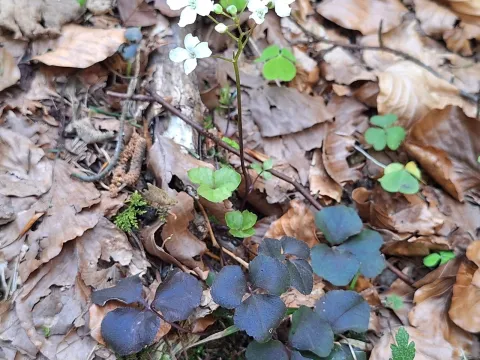
Cardamine trifolia
Cardamine trifolia
Cardamine trifolia, commonly known as trefoil bittercress, belongs to the Brassicaceae family. It is a perennial herb native to the mountain forests of Central and Southern Europe.
What the section contains
Cardamine trifolia
The plant thrives in moist, humus-rich soils with a neutral to slightly acidic pH. It is highly valued in horticulture as a shade-tolerant groundcover for woodland gardens.
Climatic preferences include cool, humid conditions. It is remarkably hardy, making it an excellent choice for temperate climate regions where other perennials might struggle with cold winters.
Botanically, it is defined by its distinctive trifoliate basal leaves and creeping rhizomes that facilitate slow, steady expansion. It blooms in early spring with attractive white flowers.
Its primary agricultural and horticultural role is ornamental. It is effectively used as a carpet-forming plant that remains attractive due to its evergreen or semi-evergreen foliage.
Sowing seeds of Cardamine trifolia should be done in late autumn, as the seeds require a cold stratification period to germinate uniformly the following spring.
Vegetative propagation via rhizome division is the most efficient method for large-scale establishment. This should be performed in early spring or immediately after the flowering period.
When planting, ensure the soil is loose and rich in organic matter. A spacing of 20-30 cm allows the plants to establish a full carpet coverage within a few seasons.
Adequate soil moisture is critical during the establishment phase. Mulching with leaf mold can help maintain the required moisture levels and suppress weed growth.
The crop does not require intensive fertilization, as it is adapted to forest soils which are typically naturally replenished by decaying organic matter.
The primary threats include fungal diseases caused by waterlogged soil conditions. Proper drainage is essential to prevent root rot and other fungal infections.
Slugs and snails are the most significant pests for this species. They are particularly attracted to the tender, lush foliage during the early spring growth cycle.
To prevent pest outbreaks, it is recommended to maintain good air circulation and keep the growing site free of excessive debris where slugs might hide.
While generally resistant to most agricultural pests, the plant may occasionally be affected by cabbage flea beetles, which are common to members of the Brassicaceae family.
Monitoring for any early signs of leaf damage is recommended, especially in years with high humidity, to apply timely and targeted protective measures.