
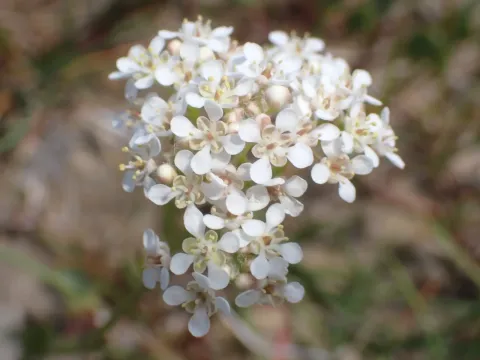
Cartilaginous pepperwort
Lepidium cartilagineum
Cartilaginous pepperwort (Lepidium cartilagineum) is a perennial herbaceous plant belonging to the Brassicaceae family, widely known for its resilience.
What the section contains
Cartilaginous pepperwort
The plant is biologically adapted to saline environments, making it a potential candidate for cultivation in areas with challenging soil conditions where other crops fail.
Optimal growth requires well-lit conditions with full sun exposure, as the species relies on high solar radiation to support its dense, cartilaginous foliage.
Soil requirements include excellent drainage properties, as the root system is highly sensitive to waterlogging which can lead to rapid decay of the plant tissue.
In its natural habitat, the plant thrives in arid and semi-arid regions, demonstrating significant drought tolerance due to its physiological water-saving mechanisms.
The most common agricultural threat to this species is the infestation of flea beetles, which primarily target the succulent leaves during the early vegetative phase.
Fungal diseases, such as downy mildew, can become a significant issue if field ventilation is poor, leading to increased humidity levels around the foliage.
Aphid populations can cause significant stress to the plants during the peak of the growing season, necessitating close monitoring of the crop canopy.
Integrated pest management strategies, such as crop rotation and intercropping, are recommended to minimize chemical input and maintain ecological balance in the field.
Regular field scouting is essential to identify early signs of nutrient deficiency or pest damage, ensuring timely interventions to preserve overall crop health.