
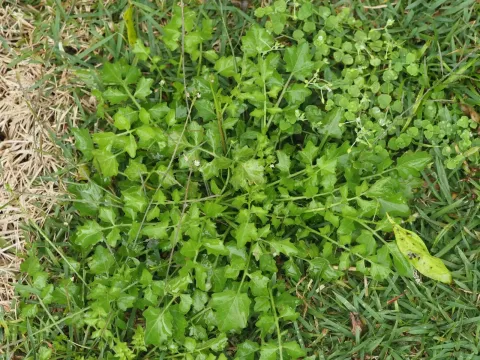
Cardamine sarmentosa
Cardamine sarmentosa
Cardamine sarmentosa belongs to the Brassicaceae family. In temperate climates, sowing in open ground is performed in early spring, as soon as soil temperatures reach 5-8 degrees Celsius.
What the section contains
Cardamine sarmentosa
For early greens, late autumn sowing is possible, allowing the seeds to undergo natural stratification. This method facilitates more uniform and vigorous germination after the snow melts.
When grown in greenhouses, sowing can begin as early as February, provided there is adequate supplemental lighting. The optimal planting density requires 15-20 centimeters between rows.
The seeds of this plant exhibit high germination rates but require shallow sowing with minimal soil coverage. Burying the seeds too deep can lead to delayed emergence or seedling failure.
The plant produces runners actively, allowing it to be managed as a perennial crop with proper care. Successional sowing throughout the season ensures a constant supply of fresh greens.
This crop is moisture-loving, making consistent soil hydration a critical requirement for successful cultivation. Soil dryness leads to leaf coarsening and a significant reduction in culinary quality.
Cardamine sarmentosa prefers fertile loam or sandy loam soils with a neutral or slightly acidic pH. Poor soils significantly inhibit vegetative growth, necessitating the application of organic fertilizers.
The plant thrives in partial shade, as direct summer sunlight can cause leaf scorching. Conversely, excessive shading may reduce the concentration of essential oils responsible for its distinct flavor.
The ideal temperature range for development is between 12 and 18 degrees Celsius. Excessive heat or temperature fluctuations can stimulate premature bolting, ending the production cycle.
Mulching the soil around the plants is an essential agronomic practice to retain moisture and suppress weeds. Because the plant is sensitive to waterlogging, good drainage is vital for survival.
Yields of Cardamine sarmentosa depend on management intensity and the frequency of selective harvests. On average, one square meter can yield up to 1.5–2 kilograms of marketable greens per season.
Maximum productivity is achieved through regular, moderate applications of nitrogen fertilizers. With proper technique, the plant recovers rapidly after harvesting, sprouting new growth from its root system.
Yield is limited by harvesting timing; the most tender leaves are obtained before mass flowering. As the plant enters its reproductive phase, the vegetative growth rate declines significantly.
For large-scale cultivation, drip irrigation systems are often employed. This technology maintains a stable water balance, which is crucial for maintaining the fresh appearance of the produce.
Total productivity over the growing season can be increased using plastic tunnels to extend the active growth period. The optimal number of cuttings per season ranges from 3 to 5 times.
The primary pests for Cardamine sarmentosa are flea beetles, which can decimate young seedlings rapidly. Protective netting or organic repellent methods are frequently used to protect the crop.
The crop is also susceptible to aphids, particularly during dry and warm conditions. Control measures require biological agents since the leaves are often consumed in a raw state.
Clubroot is the most dangerous disease, affecting the root system and stunting growth. Prevention relies on strict crop rotation, ensuring the plant does not return to the same plot for four years.
In high humidity conditions, downy mildew may develop, showing yellow spots on the leaves. This disease renders the product unmarketable due to the resulting tissue damage.
To reduce pest pressure, it is recommended to sow during optimal windows, avoiding peak insect migration. Spatial isolation from other brassica crops helps minimize total disease burden.
Harvesting begins when plants reach a height of 10-15 centimeters. The leaves and shoots are carefully cut with a sharp tool just above the soil surface to encourage rapid regrowth.
The best time for harvesting is early morning when tissues are fully turgid with moisture. This practice ensures that the produce maintains its crispness for as long as possible post-harvest.
Post-harvest, the product should be cooled or packed in perforated plastic to prevent dehydration. Shelf life in a refrigerator is typically limited to 3-4 days for optimal quality.
For seed production, a few healthy plants should be left to bolt and flower. Seeds are harvested when the pods begin to yellow, but before they shatter and drop their contents.
The harvested produce requires gentle handling due to its delicate structure. For market, it should be bundled, thoroughly cleaned of soil, and cleared of any damaged foliage.