
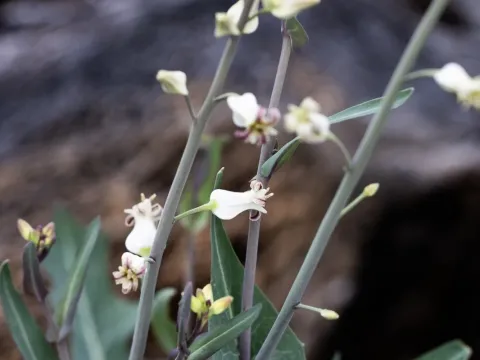
Caulanthus
Caulanthus
Caulanthus is an annual herbaceous crop whose life cycle is primarily adapted to spring growth. The ideal sowing time is early spring, once the soil has warmed sufficiently to ensure rapid and uniform seed germination.
What the section contains


Caulanthus
In regions with milder winters, autumn sowing can be a viable strategy. This allows the seeds to undergo natural stratification in the soil, often resulting in more robust seedlings compared to those planted in the spring.
Seeds should be sown at a shallow depth of 1 to 2 centimeters. Because the seeds are relatively small, shallow planting is essential to ensure they have enough energy to emerge without excessive effort.
The recommended row spacing is typically between 30 and 45 centimeters. This distance provides adequate space for the basal leaf rosette to develop fully and allows for proper air circulation around the plants.
Firming the soil after sowing is a critical step to ensure good seed-to-soil contact. This improves the capillary movement of moisture toward the seed, which is vital for starting the germination process consistently.
Belonging to the Brassicaceae family, Caulanthus is naturally adapted to arid environments. It thrives in open, sunny locations where it can receive maximum exposure to light throughout the growing season.
The crop requires well-drained, sandy-loam, or light loamy soils. It is highly sensitive to waterlogging, so fields with poor drainage or high water tables should be avoided to prevent root diseases.
While the plant is drought-tolerant once established, moderate irrigation is necessary during the active vegetative stage. Consistent moisture levels ensure better biomass accumulation and higher quality development.
Caulanthus prefers a moderate climate with distinct seasonal transitions. However, young plants are vulnerable to late spring frosts, which can damage tender leaves and set back growth if not protected.
The soil pH should ideally be neutral or slightly alkaline. In acidic soil conditions, liming may be necessary to optimize nutrient availability and promote healthy development across the entire crop.
The primary pest affecting Caulanthus is the flea beetle, which poses a significant threat to seedlings during the early stages of growth. Monitoring fields from the moment of emergence is essential for crop protection.
Excessive humidity and lack of air movement can lead to the development of fungal pathogens like powdery mildew. Maintaining proper planting density is a key agricultural practice to reduce this risk.
Aphids are another common nuisance that targets the tender flower stalks and buds. Their feeding can cause curling and distortion of the plant tissues, significantly reducing the vigor of the plant.
Root rots caused by soil-borne pathogens are often a result of heavy, poorly draining soils. Improving the soil structure and implementing a crop rotation program are the best defenses against these issues.
Regular field scouting is the most effective management strategy. Identifying pest infestations or early disease symptoms allows for timely intervention using biological or chemical control measures.
Harvesting for biomass should be scheduled before the onset of full flowering. At this stage, the plant has accumulated the highest concentration of nutrients in its foliage and stalks.
For seed production, harvesting must wait until the pods reach full maturity. Because many species of this genus have dehiscent pods, careful timing is required to prevent significant seed loss in the field.
Post-harvest, the plant material should be dried in a well-ventilated, shaded area. Proper drying is crucial to stabilize the moisture content and prevent post-harvest spoilage by mold or pests.
Mechanical harvesting requires machinery calibrated to be gentle on the fragile pods. Efficient cleaning processes are then used to separate the seeds from any remaining chaff or debris.
Stored seeds should be kept in a cool, dry, and dark environment. Maintaining low moisture content during storage ensures that the seed viability remains high for subsequent planting seasons.