
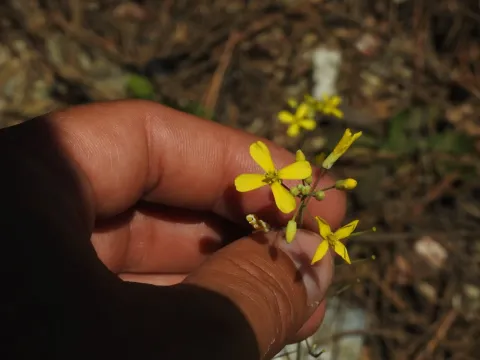
Barrelier's cabbage
Brassica barrelieri
Barrelier's cabbage, a member of the Brassicaceae family, is typically propagated via seeds that germinate well in cool, moist soil conditions common in Mediterranean climates.
What the section contains
Barrelier's cabbage
In agricultural settings, sowing is conducted during the early spring months to ensure that the plants establish a deep root system before the onset of summer heat.
The seeds should be sown in shallow furrows, covered with a thin layer of fine soil to promote uniform emergence and prevent seed displacement.
Proper spacing between rows is essential to ensure adequate airflow and sunlight penetration, which are vital for the healthy development of the basal rosette.
Staggered sowing may be employed to extend the period of vegetative growth, allowing for a more continuous biomass production throughout the season.
This species thrives in full sun exposure, requiring at least six to eight hours of direct sunlight daily to maintain its physiological vigor.
Well-drained soil is non-negotiable for this crop, as it is highly sensitive to root asphyxiation caused by excessive water stagnation in the root zone.
The plant is naturally adapted to limestone or calcareous soils, showing a preference for slightly alkaline pH levels in the growing environment.
While drought-tolerant, optimal growth and leaf tenderness are achieved when consistent, moderate soil moisture is maintained during the peak vegetative phase.
Temperature management is key; the plant prefers cool to moderate climates and may suffer stress if exposed to prolonged, intense heat waves.
Cruciferous flea beetles are the most significant pests during the seedling stage, often causing severe defoliation that can jeopardize plant survival.
Clubroot, caused by soil-borne pathogens, poses a major risk and requires strict crop rotation practices to minimize soil infection levels.
Aphid infestations are frequently observed on the tender flower stalks, which can lead to stunted growth and reduced seed quality in mature plants.
Fungal leaf spots can develop rapidly under conditions of high humidity or poor air circulation, necessitating prompt horticultural intervention.
Integrated pest management, including physical barriers and monitoring, is recommended to control populations of harmful insects without excessive chemical use.