
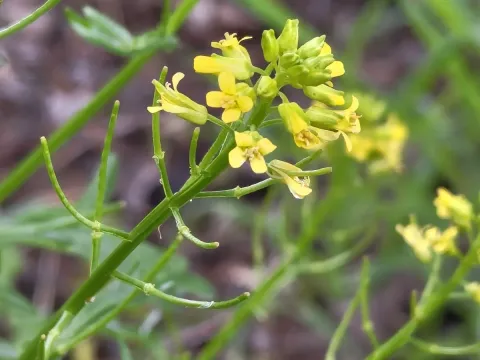
Barbarea intermedia
Barbarea intermedia
Barbarea intermedia is a biennial or perennial herbaceous plant belonging to the Brassicaceae family. In agricultural settings, it is typically sown in early spring or late autumn to capitalize on soil moisture levels, which are critical for the germination of its small seeds.
What the section contains
Barbarea intermedia
The sowing depth should be kept between 1 and 2 centimeters. Shallow planting is essential because the small seed size limits the reserves available to the seedling during the early emergence phase, making deep burial a significant cause of poor stand establishment.
Standard row sowing techniques are commonly used to ensure optimal plant density. Maintaining rows spaced 15 to 20 centimeters apart facilitates efficient growth and allows for mechanical weeding or other cultural practices during the vegetative stage.
The crop is highly valued for its vigorous spring growth, which allows it to cover the soil quickly and suppress competing weeds. When cultivated as a green manure or cover crop, early spring sowing is preferred to maximize biomass accumulation before the transition to flowering.
Firming the seedbed after sowing is a vital agronomic practice. Using a light roller improves capillary moisture movement from the deeper soil layers to the seed zone, ensuring uniform emergence even if rainfall is limited shortly after planting.
Barbarea intermedia is well-adapted to a variety of environmental conditions, showing notable cold hardiness. It performs best on fertile loamy or sandy loam soils that have adequate drainage, though it is more tolerant of moist conditions than many other cultivated brassicas.
The crop prefers soils with a near-neutral pH, typically ranging between 6.0 and 7.5. While it can survive on slightly acidic soils, liming is recommended to optimize nutrient availability and promote robust root development across the entire field.
Light availability is a primary driver for the plant's physiological development. Exposure to full sunlight stimulates the production of leaves and subsequent flower stalks, making site selection crucial for optimizing yield in either forage or seed production programs.
Water requirements are moderate, but consistent moisture during the vegetative stage is essential for high biomass production. Drought stress can trigger premature flowering, which reduces the nutritional quality of the plant material and limits total harvest volume.
Balanced mineral nutrition, specifically appropriate levels of nitrogen, is required to sustain the rapid vegetative growth observed in the early season. Potassium and phosphorus supplementation can further enhance the plant's structural integrity and stress resistance.
The most common pests affecting Barbarea intermedia are cruciferous flea beetles, which can cause severe damage to young cotyledons and early true leaves. Preventive measures such as seed treatments or early-season insecticidal applications are often necessary.
The rape blossom beetle is another significant threat, particularly as the crop nears the budding stage. By feeding on flower buds, this insect can substantially reduce the potential seed yield, necessitating careful monitoring and timely intervention if thresholds are exceeded.
Fungal diseases, including downy mildew and various types of rots, can become problematic in cool, high-humidity environments. These issues are best managed by ensuring good aeration within the canopy and avoiding overly dense sowing rates.
Cultural control remains the cornerstone of protection. Rotating crops and maintaining spatial isolation from other cruciferous plants reduces the build-up of specialized pests and pathogens in the soil, promoting long-term field health.
Integrated Pest Management (IPM) strategies, which prioritize regular field inspections and the use of targeted biological or chemical agents only when necessary, are recommended to maintain the productivity of the crop while minimizing environmental impact.