
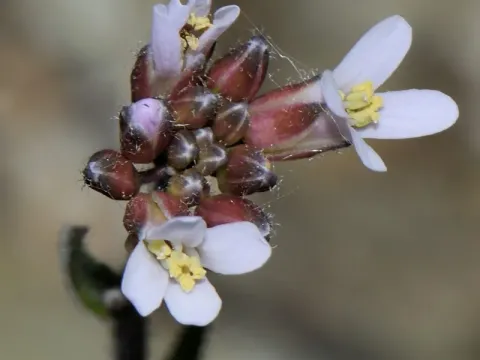
Beira rockcress
Arabis beirana
Beira rockcress (Arabis beirana) belongs to the Brassicaceae family and is commonly grown as an ornamental perennial. Sowing is typically carried out in spring, around April or May, once the soil has warmed up to promote steady germination.
What the section contains
Beira rockcress
Fall sowing is also an option, as it allows seeds to undergo natural stratification. For seed propagation, sow on the surface of a well-draining substrate, as the seeds require light to germinate effectively.
Propagation by division is best performed in early spring or late summer. Dividing established clumps helps maintain plant vigor and allows for the expansion of existing garden beds.
When transplanting into the field, maintain a spacing of 25–30 centimeters between individual plants. Adequate spacing is essential to ensure good air circulation, which helps maintain plant health.
Successful cultivation relies on consistent monitoring during the early stages of establishment. Providing adequate moisture without waterlogging is key to developing strong root systems.
This species thrives in open, sunny locations with light, free-draining soil. Drainage is critical; the plant is highly susceptible to root damage if the substrate remains saturated for too long.
The ideal soil pH is neutral to slightly alkaline. In heavy or clay-based soils, gardeners should incorporate sand or fine gravel to improve aeration and facilitate rapid water drainage.
Beira rockcress is notably drought-tolerant once established. Supplemental irrigation should only be provided during prolonged dry spells, ensuring the base of the plant remains dry.
The plant is well-adapted to cooler temperature fluctuations, reflecting its mountainous origin. It is a resilient choice for rock gardens and borders where environmental conditions are variable.
Fertilization should be applied conservatively in early spring. Over-fertilizing with nitrogen can lead to excessive foliage growth, which often results in a weak, sparse blooming habit.
Root rot is the most significant threat, usually caused by poor drainage or excessive irrigation. Wet conditions quickly promote fungal pathogens that compromise the plant's health.
Flea beetles are common pests that attack the leaves of this brassicaceous plant. Integrated pest management, including periodic monitoring and appropriate insecticides, is recommended for effective control.
Aphids may occasionally infest young shoots, particularly during warmer months. Early detection and mechanical removal or gentle application of insecticidal soap usually manage the population.
Powdery mildew can occur if airflow is restricted or if humidity levels remain consistently high. Proper plant spacing and avoiding overhead watering are effective preventive strategies.
Sanitation practices, such as removing dead foliage and spent flower stalks, prevent the accumulation of debris that can harbor pests and disease-causing fungi throughout the season.