
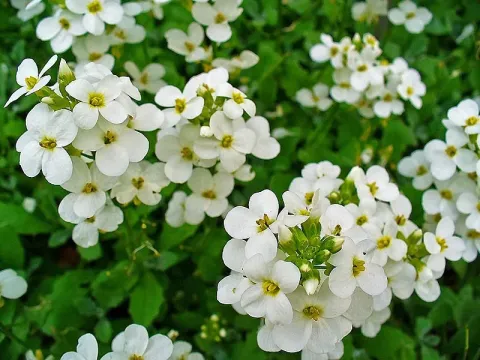
Arabis hybrids
Arabis hybrids
Seeds of Arabis hybrids are typically sown in early spring, specifically in March or April, indoors or in cold frames. Direct sowing in the garden bed can be performed in late May once the risk of frost has completely passed for the season.
What the section contains
Arabis hybrids
It is crucial not to cover the seeds deeply, as they require light to germinate effectively. Simply press them gently onto the surface of a fine, moist potting mix and maintain steady humidity until seedlings emerge.
Pricking out the seedlings should be done when the first two true leaves appear. This encourages the development of a robust root system, ensuring the plants are strong enough for transplanting into the garden later in the season.
Vegetative propagation via cuttings is highly effective for maintaining specific hybrid traits. Cuttings should be taken immediately after the main flowering season is over and rooted in a well-draining sandy medium under a cover.
The spacing between plants is essential for airflow, typically ranging from 30 to 40 centimeters apart. Proper spacing helps prevent moisture accumulation and reduces the overall risk of fungal diseases during the humid summer months.
Arabis hybrids belong to the Brassicaceae family and are widely recognized as excellent perennial groundcover plants. They are prized for their early spring flowering, which transforms garden rockeries into vibrant carpets of color.
The plants thrive in full sun exposure. While they can tolerate partial shade, insufficient light often results in leggy growth and a sparse flower display, which significantly impacts their overall aesthetic appeal in landscape design.
Well-draining, moderately fertile soil is preferred for optimal performance. The plant is quite sensitive to waterlogging, so soil amendments like coarse sand or gravel are highly recommended for heavy or clay-based garden soils.
Watering requirements remain moderate throughout the growing season. It is vital to maintain consistent soil moisture during the establishment phase, but once mature, the plant demonstrates good drought tolerance.
Regular maintenance includes shearing back the plants by about one-third after the flowering period ends. This process keeps the mounds compact and encourages a fresh flush of foliage, ensuring the plant remains healthy and vigorous.
Crucifer flea beetles are the most frequent pests associated with Arabis hybrids. They leave small holes in the leaves, which can weaken the plant. Applying appropriate insecticidal treatments or using fine netting can effectively manage these populations.
Powdery mildew is a common fungal threat, especially in conditions where air circulation is restricted. To manage this, ensure plants are spaced adequately and avoid overhead watering in the late afternoon when leaves may remain wet.
Root rot is often the result of poor drainage and over-saturation of the soil. Improving the soil structure is the best preventative measure against this serious condition, as once roots are damaged, recovery is difficult.
Aphids can occasionally infest the flower buds or new growth during hot, dry weather. Regular inspections allow for early detection, making it much easier to address the issue with organic soap sprays or other mild treatments.
Effective pest and disease management is rooted in good garden hygiene. Clearing debris, managing weeds, and ensuring proper plant spacing are fundamental practices for keeping Arabis hybrids healthy year-round.