
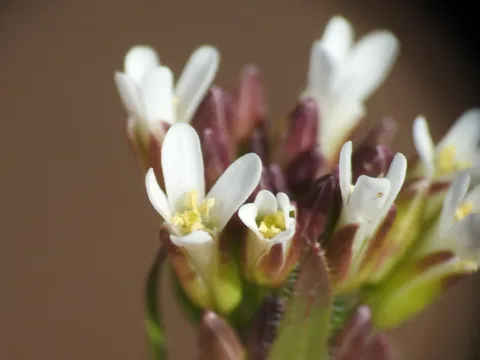
Arabis planisiliqua
Arabis planisiliqua
Arabis planisiliqua, commonly known as the tower rockcress, is a herbaceous perennial belonging to the Brassicaceae family. It is recognized for its slender, erect growth habit and resilience in various environmental conditions.
What the section contains
Arabis planisiliqua
The optimal sowing time is early spring, once the soil has reached a workable temperature. Alternatively, late autumn sowing can be performed to allow for natural stratification, which enhances the uniformity of germination.
The seeds are small and should be sown at a shallow depth of approximately 1 cm. A firm seedbed is essential to ensure good contact between the seed and the soil, facilitating efficient moisture uptake.
Row spacing should be maintained between 15–20 cm to allow for adequate ventilation and ease of weeding. Proper plant spacing reduces competition and promotes the development of robust individual plants.
During the establishment phase, maintaining consistent soil moisture is crucial. Once the root system is well-developed, the plant shows improved drought tolerance and general vigor.
This species thrives in well-drained, sandy loam soils with a neutral pH. It is sensitive to waterlogging, so ensuring effective field drainage is a top priority for successful cultivation.
The crop is highly photophilous and requires full sun exposure to maintain its compact habit and ensure high productivity. Shade results in elongated stems and diminished yield potential.
Climate adaptability is a key strength of Arabis planisiliqua, as it is well-adapted to temperate zones with distinct seasonal cycles. It exhibits strong winter hardiness during dormancy.
Balanced fertilization, particularly with moderate nitrogen inputs during the early vegetative stage, supports lush growth. Over-fertilization, however, should be avoided to prevent susceptibility to pathogens.
Regular monitoring of moisture levels during the flowering period is recommended to ensure optimal pollination and subsequent seed set, which is vital for propagation purposes.
The crop is primarily susceptible to crucifer-specific pests, such as flea beetles. These insects can cause significant damage to young seedlings, requiring vigilant monitoring and management.
Fungal infections, including downy mildew, may occur during periods of high humidity and poor air circulation. Proper plant spacing and field hygiene are the primary preventative management tactics.
Aphid infestations can become problematic in dry conditions, potentially vectors for viral diseases. Biological control agents or targeted treatments are often utilized in professional agronomy settings.
Field sanitation remains the cornerstone of disease prevention. Removing crop residues and controlling alternate host weeds are essential to prevent the carryover of pests and diseases between seasons.
- Flea beetles
- Aphids
- Downy mildew
- Root rot