
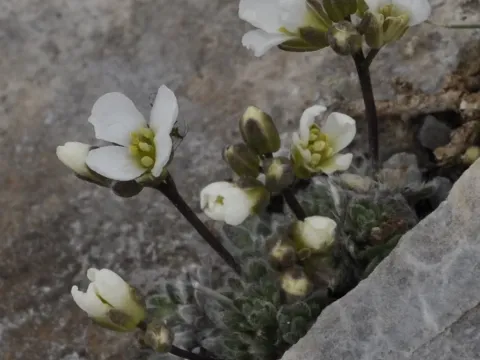
Arabis bryoides
Arabis bryoides
Arabis bryoides is a perennial herbaceous plant belonging to the Brassicaceae family. It is native to the high-altitude mountainous regions of the Balkan Peninsula, where it typically thrives in rocky crevices and on steep, nutrient-poor alpine slopes.
What the section contains
Arabis bryoides
The plant is known for its distinctive moss-like, cushion-forming habit. It features small, evergreen leaves arranged in dense rosettes, providing a compact appearance that remains attractive even outside the blooming season when small white flowers emerge on short stems.
In terms of climatic requirements, Arabis bryoides is exceptionally hardy and adapted to cool, high-altitude conditions. It requires a location with full sun exposure to maintain its dense growth form, as shading will inevitably lead to leggy, unattractive stems and poor flowering.
The soil must be highly porous and well-draining, mimicking the stony alpine conditions of its natural habitat. It performs best in rocky or sandy substrates with low organic content. Excessive water retention is the primary cause of plant failure, particularly during the dormant season.
This species is highly valued in horticulture for rock gardens, scree slopes, and trough gardens. Its ability to colonize tight spaces between stones makes it a staple for alpine gardeners looking to recreate natural mountain landscapes with low-maintenance, drought-tolerant species.
The most significant threat to Arabis bryoides is root rot, triggered by poor drainage and excessive moisture. To mitigate this risk, it is essential to ensure that the crown of the plant is surrounded by coarse grit or gravel to keep foliage away from direct contact with wet soil.
Fungal diseases, including powdery mildew, can affect the plant during periods of high humidity or stagnant air. Maintaining proper spacing between plants and ensuring good air circulation are the most effective cultural methods for preventing the spread of these pathogens.
Crucifer flea beetles are the most common insect pests, capable of causing significant damage to the leaf rosettes in early spring. Regular monitoring and the application of systemic or contact insecticides are recommended if beetle activity is observed on the foliage.
Nematode infestations can occasionally affect the root system, causing stunted growth and chlorosis. Preventing such issues requires using sterilized potting media in container cultivation and avoiding the introduction of infected plant material into the garden.
Overall, vigilance regarding moisture levels is the best defense against pests and diseases. By strictly adhering to the plant's need for a dry, sunny environment and proper aeration, the grower can sustain a healthy, thriving population of this alpine gem for many seasons.