
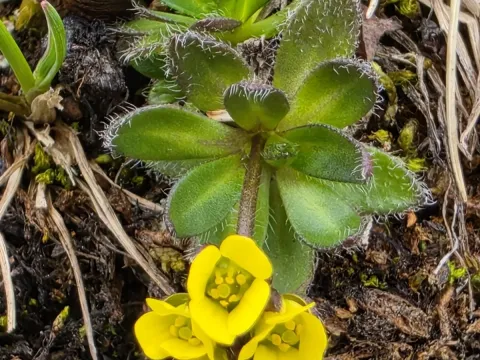
Alpine whitlow-grass
Draba alpina
Alpine whitlow-grass (Draba alpina) is a perennial herbaceous plant belonging to the Brassicaceae family. It is naturally distributed throughout Arctic regions and high-altitude mountain ranges, making it an extremely hardy species.
What the section contains
Alpine whitlow-grass
The plant forms compact, cushion-like rosettes of narrow leaves. During the spring blooming season, it produces showy yellow flowers on short stalks, which are highly prized by collectors of alpine flora.
Cultivation requires well-drained, gritty, or sandy soil. Since the plant is adapted to alpine environments, it cannot tolerate stagnant moisture, making a deep layer of drainage essential for long-term health.
The plant thrives in full sunlight and is highly resistant to extreme cold and windy conditions. It requires very little fertilization, as it is evolved to grow in nutrient-poor mineral soils found in mountainous terrain.
It is primarily used in ornamental horticulture, specifically for rock gardens, alpine troughs, and crevices. Its ability to create low, dense mats makes it an excellent choice for landscaping high-altitude garden designs.
The greatest threat to Alpine whitlow-grass is excessive soil moisture, which inevitably leads to root rot. If the soil remains soggy for extended periods, the plant will decline rapidly and die off.
Fungal pathogens such as powdery mildew can affect the foliage if there is poor air circulation. Proper spacing between plants and a dry environment are the best preventative measures to keep the foliage clean and healthy.
Cruciferous flea beetles may cause damage to the leaves. While usually manageable, infestations can occur in warmer weather, and standard insecticidal treatments are effective if natural controls fail.
Slugs and snails can also pose a risk to the cushion growth, particularly during wet spells. Applying a top dressing of gravel or grit around the base of the plant effectively discourages these pests.
Maintenance is minimal if the conditions are correct. A well-drained, sunny location is the primary requirement to ensure the plant remains free from common diseases and thrives for many years in a garden setting.