
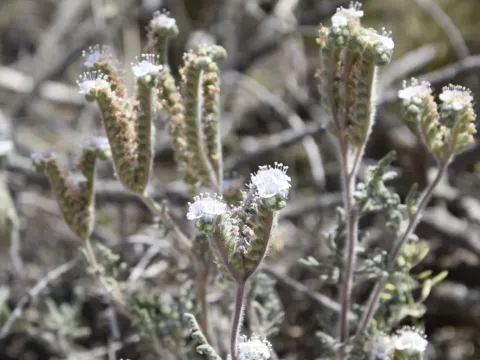
Phacelia artemisioides
Phacelia artemisioides
Phacelia artemisioides belongs to the Boraginaceae family. Sowing is typically carried out in early spring as soon as the soil warms up to 5–8 degrees Celsius, which is sufficient for rapid and uniform seedling emergence.
What the section contains
Phacelia artemisioides
Winter sowing is also an option, taking advantage of soil moisture from snowmelt, which facilitates early establishment and a robust root system before the dry summer heat begins.
Seed depth should be maintained at 1–2 centimeters, as the small seeds require intimate contact with the moist soil surface to initiate germination without the risk of drying out.
Seeding rates range from 10 to 12 kilograms per hectare depending on the intended use; denser stands are preferred when the crop is grown as a green manure for soil improvement.
The plant demonstrates vigorous early growth, successfully suppressing weeds through canopy closure, which reduces the need for mechanical cultivation or herbicides during the growing season.
This crop is highly adaptable to various soil types, thriving in light sandy soils as well as heavier clay soils, provided that the drainage is adequate and there is no waterlogging.
Phacelia artemisioides requires full sun exposure to reach its maximum productivity; shaded areas significantly reduce photosynthetic rate and total biomass accumulation throughout the cycle.
The ideal soil pH for optimal growth is between 6.0 and 7.5, although the plant shows high tolerance to a wide range of soil conditions, including low-fertility or degraded soils.
While the plant is moderately drought-tolerant once established, reliable moisture during the initial germination phase is essential to ensure a uniform population across the field.
It is valued for its deep rooting system which physically improves soil structure by increasing aeration and water infiltration in compact soil layers, benefiting subsequent crops.
One of the primary benefits of this species is its excellent phytosanitary properties, as it is largely resistant to common agricultural pests and diseases found in grain and vegetable crops.
Water stagnation is the most significant risk factor, as it can predispose the root system to rot and fungal infections, making proper site selection and soil management a priority.
Insect pests are generally not a concern because the foliage contains essential oils that act as a natural repellent, helping to maintain a healthy field environment.
Occasional infestations of aphids may occur during prolonged dry periods, but these are usually self-limiting as natural predatory insects quickly colonize the field to manage the population.
By incorporating this plant into a crop rotation, farmers can effectively disrupt the life cycles of soil-borne pathogens, leading to healthier soil profiles for future harvest cycles.
Harvesting for green manure should ideally occur at the peak of the flowering stage, as this is when the nutrient concentration in the plant tissue is at its absolute maximum.
If cultivated as a honey plant, harvesting the foliage is not required, as the extended blooming period provides a constant source of nectar for pollinators over several weeks.
For seed production, the harvest should commence once approximately 70–80 percent of the seed capsules turn brown, requiring careful handling to prevent excessive field losses due to shattering.
Post-harvest seed processing requires cleaning and drying the material until the moisture content reaches a safe storage level of approximately 12–14 percent to prevent heating and spoilage.
The incorporated green biomass serves as an efficient natural fertilizer, releasing nitrogen, potassium, and organic matter into the soil, thereby increasing overall farm sustainability.