
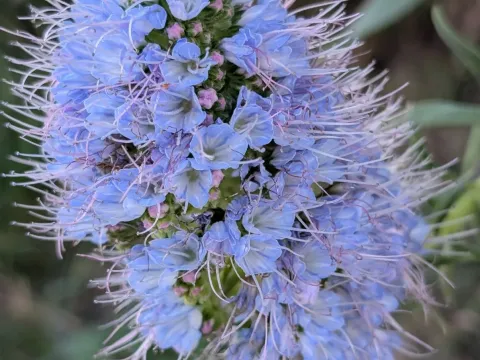
Pride of Madeira
Echium nervosum
Pride of Madeira (Echium nervosum) is a perennial woody shrub belonging to the Boraginaceae family. Originally native to the Madeira archipelago, this plant is highly specialized, requiring specific environmental conditions to thrive outside its natural range.
What the section contains
Pride of Madeira
The plant demands well-drained, sandy, or rocky soil with a neutral to slightly alkaline pH. Proper aeration is crucial; heavy, clay-based soils that retain moisture for prolonged periods will inevitably lead to root rot and the subsequent failure of the crop in a commercial or garden setting.
Sunlight is the most critical factor for the development of Echium nervosum. It requires full sun exposure for at least 6 to 8 hours a day to maintain a compact growth habit and to stimulate prolific flowering, which is essential for its role as a botanical asset.
Regarding climate, the plant thrives in Mediterranean-type climates where temperatures remain consistently mild. It lacks frost tolerance and is susceptible to cold damage; therefore, in temperate zones, it is typically managed as a container plant and brought indoors during the winter months.
Agrotechnical management includes sparse irrigation once the plant is established. It is highly drought-tolerant, meaning overwatering is more detrimental than underwatering. Fertilization should be kept to a minimum to avoid promoting excessive vegetative growth at the expense of floral productivity.
The primary threats to Echium nervosum are fungal diseases associated with excessive moisture. Pathogens such as Phytophthora can cause rapid decline, starting from the roots and moving upwards through the vascular system, often triggered by poor soil drainage.
Powdery mildew represents a common challenge in greenhouse environments or areas with poor air circulation. The presence of white, dusty spores on foliage not only ruins the plant's aesthetic value but also hinders photosynthesis, weakening the overall plant health.
Insect pests, particularly aphids and spider mites, are frequent threats that feed on the soft tissue of new foliage. These pests can significantly stunt plant growth and, if left unchecked, provide entry points for secondary bacterial and viral infections.
Slugs and snails may attack seedlings and young, tender plants, especially in moist or shaded areas. Implementing protective measures such as physical barriers or approved molluscicides can prevent significant damage during the early establishment phase of the crop.
Effective disease management relies heavily on preventative measures. Ensuring adequate spacing between plants to maximize airflow, avoiding overhead watering to keep foliage dry, and maintaining a clean growing area are essential strategies for long-term plant viability.