
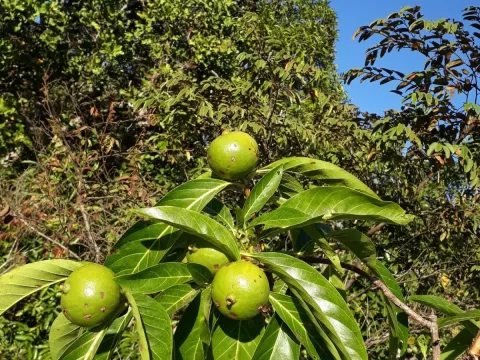
Borojo
Borojoa
Borojo is a tropical crop that is primarily propagated via seeds in humid forest environments. To ensure successful germination, seeds require a stable, high temperature, typically between 25–28 degrees Celsius, along with consistently high substrate humidity.
What the section contains
Borojo
In its natural habitat, seedlings are transplanted into the soil at the onset of the rainy season to ensure they receive sufficient moisture for root establishment. It is highly recommended to use protected nurseries during the early developmental stages of the seedlings.
When establishing commercial plantations, it is crucial to maintain a distance of at least 5–6 meters between adult trees, as the plant develops a wide and sprawling crown. High-density planting hinders air circulation, which negatively impacts foliage health and fruit quality.
Soil preparation requires the application of organic matter, such as compost or well-rotted manure, to improve substrate structure. Borojo prefers humus-rich soils with excellent drainage to prevent root waterlogging, which is a major cause of plant mortality.
The growth process of Borojo is relatively slow, often taking 8–10 months from sowing to transplanting. Agronomists emphasize the importance of regular mulching around the base of the trees to preserve moisture and suppress competing weed growth.
This crop belongs to the Rubiaceae family and is a native of the humid tropical forests of South America. The optimal climate for productive growth involves a mean annual temperature of approximately 26–28°C with minimal seasonal fluctuations.
Borojo requires abundant and evenly distributed rainfall throughout the year, ranging from 2000 to 4000 mm annually. The plant is extremely sensitive to prolonged drought periods, which can lead to premature leaf drop and fruit abortion.
Soil requirements include a highly acidic environment (pH 4.5 to 6.0) and excellent water permeability. Borojo performs poorly in heavy clay soils where surface water accumulates, frequently resulting in root rot infections.
While the plant is well-adapted to shade in its juvenile stage, adult trees require adequate amounts of diffused sunlight to ensure high productivity. Direct, intense sunlight can cause significant scorching on young leaves and developing fruit surfaces.
Protecting the plantation from strong winds is a critical factor, as they can cause physical damage to the fragile branches of the tree. Many commercial growers cultivate windbreaks around their Borojo plots to mitigate these environmental stresses.
The productive life of a Borojo tree typically begins 4–5 years after transplantation. Yield varies based on the tree's age, the quality of pollination, and strict adherence to irrigation management during the dry spells.
A single mature tree is capable of producing between 30 and 60 fruits per year depending on the level of care and canopy health. The fruits are heavy, often reaching 0.5–1 kilogram, which places considerable structural stress on the plant's branches.
The commercial utility of the fruit spans the food industry and pharmacology. Borojo is highly prized for its antioxidant, amino acid, and vitamin profile, often being marketed as a superfood of the Amazon.
Industrially, the fruit is processed into juices, nectars, jams, and nutritional supplements. The pulp has a characteristic tart flavor and high nutritional density, making it a valuable commodity in both local and international markets.
To maximize yields, growers implement regular sanitary pruning, removing dead or diseased branches. Fruit thinning is also performed to prevent tree exhaustion during seasons with overly heavy fruit sets.
The primary threats to Borojo are fungal diseases that proliferate in conditions of consistently high humidity. Various types of leaf spot diseases are prevalent and can significantly reduce the photosynthetic surface of the plant.
Root rot, caused by pathogens such as Phytophthora species, poses a serious risk if water drainage is inadequate. Prevention relies on maintaining optimal site drainage and adhering to strict sanitary standards within the plantation grounds.
Pests frequently include insects that attack the ovaries and young fruit, leading to deformed harvests. Regular inspection of the trees allows for the early detection and management of aphid or scale insect colonies.
Ants and certain species of beetles can damage the bark and young shoots of Borojo trees. Management strategies include biological control methods and the selective application of insecticides only when infestation thresholds are exceeded.
- Regular crown and canopy inspection
- Timely sterilization of pruning tools
- Selection of high-quality, disease-resistant plant material
- Monitoring nitrogen levels to prevent excessive soft growth
Harvesting Borojo is a manual labor-intensive process, as the fruits are extremely sensitive to mechanical impact. Maturity is signaled by a color shift of the skin from green to a brownish-tan hue, accompanied by a distinct aromatic profile.
It is vital to harvest at the precise moment of maturity, as overripe fruits spoil rapidly due to their high sugar and moisture content. Harvested fruits require careful handling and transportation in well-ventilated containers.
Borojo has a short shelf life in its fresh state, necessitating immediate processing or the use of cold chain logistics and low-temperature preservation techniques to maintain quality.
Workers are advised to wear gloves and use sharp shears during harvest to avoid wounding the fruit skin, which is highly prone to injury. The integrity of the skin directly correlates with the final quality and market value of the product.
During the harvest, farmers sort the fruits by size and degree of maturity to streamline distribution. Well-graded, high-quality batches fetch significantly better prices when supplied to industrial processing facilities.