
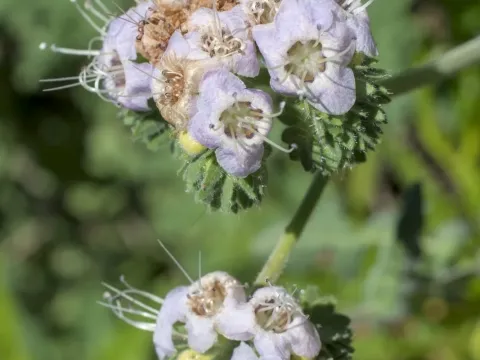
Phacelia ramosissima
Phacelia ramosissima
Phacelia ramosissima is a perennial herbaceous plant belonging to the Boraginaceae family. It is recognized for its significant role as a nectar-producing crop, highly valued in apiculture for supporting pollinator populations throughout the growing season.
What the section contains
Phacelia ramosissima
The optimal sowing time for Phacelia ramosissima is early spring, once the soil has warmed sufficiently and is workable. This timing allows the plant to establish a deep root system before the onset of peak summer heat.
Seeds should be sown at a shallow depth, typically 1.5 to 2 centimeters, to ensure proper germination. The plant performs well when sown in rows, which simplifies field management and weed control during the initial stages of vegetative development.
Choosing high-quality, viable seeds is essential for a uniform stand. Depending on the desired density, the seeding rate can be adjusted to balance between biomass production and the development of reproductive organs for nectar collection.
Soil preparation before sowing is critical. A finely textured, weed-free seedbed maximizes contact between the soil and the seed, promoting rapid and synchronous emergence across the entire field.
Phacelia ramosissima thrives in locations with full sun exposure. While it exhibits some tolerance for partial shade, optimal nectar production and biomass accumulation are strictly correlated with the intensity and duration of sunlight.
The crop prefers well-drained, fertile soil types, such as loams or sandy loams, with a neutral pH level. It is not well-suited for heavy clay soils that are prone to waterlogging, as these conditions significantly inhibit root development.
Adequate soil aeration is a key requirement for healthy growth. The plant benefits from balanced nutrient levels, particularly potassium and phosphorus, which aid in strengthening the stems and supporting the prolonged flowering period.
Regarding moisture, Phacelia ramosissima is relatively drought-tolerant once established. However, maintaining consistent moisture levels during the early growth stages is vital to achieving a dense stand that can shade out potential weed competitors.
In a crop rotation system, this species acts as an excellent soil conditioner. Its root architecture helps improve soil porosity and structure, leaving the land in an improved state for subsequent crops like cereals or vegetables.
This crop is generally robust and displays a high level of natural resistance to most common agricultural diseases. Maintaining proper plant spacing and avoiding excessive moisture are sufficient practices to prevent the majority of fungal issues.
While the plant is rarely decimated by pests, monitoring for aphids during particularly humid seasons is advisable. In most cases, natural predators are capable of keeping pest populations below the economic injury threshold.
Weed management remains the most significant challenge during the early seedling stage. Once the plants begin to canopy, their rapid growth usually outcompetes most invasive weeds, reducing the need for mechanical or chemical intervention.
The presence of beneficial insects and pollinators is a key consideration when planning any pest control. The use of broad-spectrum pesticides should be strictly avoided during the flowering phase to protect the bee population.
Environmental stressors such as late spring frosts or prolonged high heat can occasionally impact development. However, the inherent hardiness of Phacelia ramosissima allows it to recover well once favorable conditions return.