
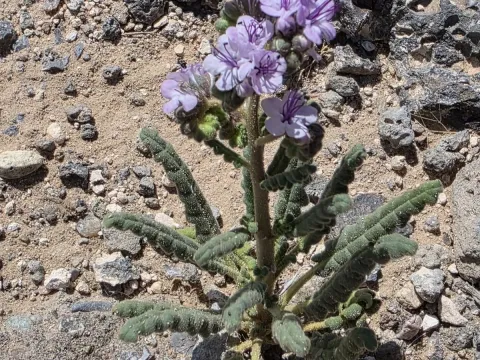
Phacelia integrifolia
Phacelia integrifolia
Phacelia integrifolia is a versatile annual plant of the Boraginaceae family. Sowing is typically conducted in early spring, as soon as the soil is workable, due to its excellent tolerance to cool temperatures and light frosts.
What the section contains
Phacelia integrifolia
The seeding rate is generally 8–12 kg per hectare, depending on the intended use (cover crop vs. seed production). It is essential to ensure shallow placement of seeds at a depth of 1.5–2 cm to ensure optimal germination and avoid seedling exhaustion.
The plant demonstrates vigorous early growth, which is a significant advantage in competing with weeds. This rapid development makes it a preferred choice for farmers looking to establish a thick ground cover quickly without the need for extensive chemical control.
For cover crop applications, successive sowings can be practiced throughout the season. This strategy provides consistent soil protection and continuous nectar supply for pollinators, which helps in maintaining biodiversity on the farm.
Proper seedbed preparation, including firming the soil with a roller, significantly improves germination rates. This contact ensures the seed can efficiently utilize capillary moisture from the deeper soil layers during the critical establishment phase.
Originating from the arid regions of North America, Phacelia integrifolia is highly drought-tolerant. It thrives in well-drained soils ranging from sandy loams to heavier substrates, provided there is no standing water to compromise root health.
The plant performs best under full sun, which is crucial for its intense nectar production and rapid accumulation of vegetative biomass. While it is hardy, an adequate supply of moisture during the bud stage can lead to a substantial increase in overall yield.
Phacelia prefers a soil pH in the neutral range of 6.0 to 7.5. It is remarkably efficient at extracting nutrients from lower soil horizons, effectively recycling minerals that might otherwise be leached away from the root zone of shallow-rooted crops.
The plant does not require high levels of mineral fertilizers, as it is adapted to survive in resource-poor conditions. However, adding modest amounts of organic matter can enhance its performance, especially when used for green manure purposes.
Its deep taproot system is instrumental in improving soil structure, breaking up compaction, and increasing permeability. These physical improvements benefit the subsequent crops in the rotation by allowing for better root penetration and improved soil aeration.
The economic utility of Phacelia integrifolia is multidimensional, serving as a premier honey plant, a productive fodder crop, and a powerful green manure. Its flowers are rich in nectar and attract a wide range of beneficial insects to the field.
As a green manure, it can produce between 15 and 30 tons of biomass per hectare. This organic matter decomposes rapidly after incorporation into the soil, providing nitrogen and other essential nutrients to the following crop in the rotation.
Seed production requires careful timing, with yields averaging between 300 and 600 kg/ha. The harvest must be managed to minimize shattering losses, often utilizing a two-stage process to ensure high-quality, mature seeds.
In animal husbandry, the fresh plant material serves as a nutritious supplement in forage rations. Its balanced chemical composition makes it an attractive, eco-friendly fodder source that enhances the health and productivity of livestock.
The honey derived from Phacelia is known for its mild flavor and light color, making it highly marketable. Beekeepers often prioritize this crop for its long blooming duration, which extends the honey production window compared to other short-lived species.
Phacelia integrifolia is inherently resistant to many common agricultural diseases, making it a low-input crop. This characteristic aligns it perfectly with the requirements of organic farming and sustainable land management practices.
Pest pressure is generally minimal, although aphids and specific beetles may appear during hot and dry spells. These infestations are rarely economically significant, and the crop's resilience often allows it to recover without chemical intervention.
Fungal issues, such as powdery mildew, may occur only if the crop is sown too densely or if there is chronic poor drainage in the field. Maintaining recommended seeding rates and proper field hygiene are the most effective preventive measures.
The crop serves as a botanical break in rotation, effectively disrupting the lifecycle of various pests and pathogens that typically attack cereal or vegetable crops. This makes it an invaluable tool for Integrated Pest Management (IPM) programs.
Farmers should monitor for signs of nutritional stress, although this is uncommon. Maintaining a balanced soil moisture regime is usually sufficient to ensure the crop stays robust and resistant to any minor opportunistic infections throughout the season.
For soil improvement (green manure), the harvest is timed at the peak of the flowering stage. This timing captures the maximum accumulation of biomass and nutrients before the energy is diverted into seed production.
The plants are mowed and subsequently incorporated into the soil using a disk harrow or a plow. This process ensures the rapid breakdown of residues, creating a rich humus layer that significantly increases soil fertility for the following season.
When harvesting for seed, the process begins when approximately 70-80% of the inflorescences turn brown. A two-stage harvest is recommended to allow the seeds to mature uniformly in the windrows, minimizing the risk of harvest-time losses.
After threshing, the seed lot must be cleaned to remove debris and then dried to a moisture content of 12-14%. Proper cleaning and drying are essential to prevent heating during storage and to ensure long-term viability of the seeds.
Storage should take place in a cool, dry, and well-ventilated environment. Following these simple protocols ensures that the harvested seeds maintain high germination percentages for the next sowing cycle, preserving the investment in the crop.