
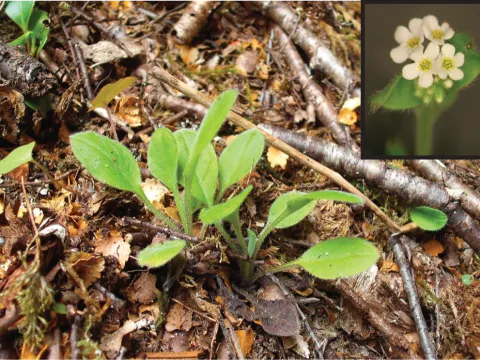
Myosotis petiolata
Myosotis petiolata
Myosotis petiolata is a perennial herbaceous plant belonging to the Boraginaceae family. This species is native to New Zealand, where it occupies highly specific ecological niches in mountainous regions, often appearing as a localized endemic population.
What the section contains
Myosotis petiolata
The plant is distinguished by its distinctively long petioles at the base of its foliage, from which its scientific name is derived. The vegetative growth is characterized by a rosetted habit, which helps the plant maintain moisture and thrive in rugged, rocky environments.
Regarding climatic requirements, the species favors cool, moist conditions typical of alpine or subalpine zones. It is highly sensitive to heat stress and requires consistently cool ambient temperatures to complete its lifecycle, making it unsuitable for hot, low-lying environments.
Soil requirements involve well-drained, nutrient-rich substrates, often found along rocky crevices or stream banks. Good aeration of the substrate is essential, as the roots are susceptible to rot when subjected to prolonged stagnant water conditions in compacted soil.
In terms of agricultural or commercial use, Myosotis petiolata is not cultivated as a standard crop. Its primary significance lies in its ecological contribution to alpine biodiversity and its potential value in specialized botanical conservation programs aimed at protecting rare native flora.