
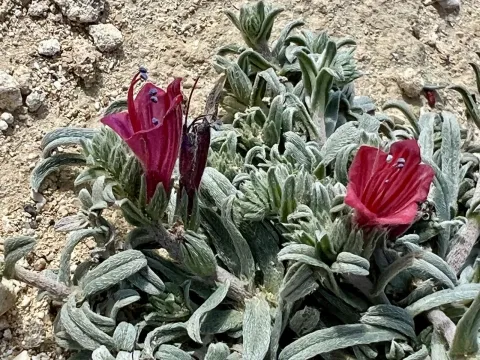
Narrow-leaved viper's bugloss
Echium angustifolium
Narrow-leaved viper's bugloss (Echium angustifolium) belongs to the Boraginaceae family and is recognized as a valuable honey-producing crop. Planting is typically performed in early spring or late autumn, depending on the climatic zone and soil moisture levels.
What the section contains
Narrow-leaved viper's bugloss
Seeds should be sown at a depth of 1-2 cm to ensure optimal germination. Row spacing is usually kept between 45 and 60 cm to provide plants with sufficient space and light for vigorous development during their first year.
The seeds possess high germination energy, but maintaining optimal density is crucial for crop success. During the first year, the plant focuses on forming a deep taproot and a strong basal rosette, preparing for flowering in the second season.
Crop management requires careful site preparation to ensure a uniform surface. Proper contact between the soil and seeds is achieved by rolling the field immediately after sowing, which facilitates uniform emergence.
Regular monitoring of field conditions after sowing is necessary to manage weeds in the early stages. Once the plants grow and close the canopy, they become highly competitive and suppress weed growth effectively.
This species thrives in open, sunny locations and is highly sensitive to shade. Exposure to direct sunlight is the primary factor for maximizing nectar production and general plant vitality.
Ideal soil conditions include light sandy or loamy soils with excellent drainage. The plant cannot tolerate waterlogged conditions, making well-drained slopes or elevated ground the best choice for cultivation.
The narrow-leaved viper's bugloss is notably drought-tolerant due to its deep taproot system. It performs well on marginal, poor, or rocky soils, providing value in areas where other traditional crops might fail.
While the plant is undemanding regarding soil fertility, supplemental potassium and phosphorus fertilizers applied at the budding stage can significantly enhance nectar volume and extend the flowering period.
Winter hardiness is a key characteristic of the species, allowing it to withstand harsh cold provided there is adequate soil aeration and no prolonged standing water. In areas with extreme winters, snow cover is beneficial for protection.
Common pests include weevils that damage foliage and aphids that infest buds. Implementing integrated pest management strategies, including regular field monitoring, is essential to minimize potential economic loss.
Fungal diseases like powdery mildew may occur in high-humidity seasons. Proper spacing and airflow are critical to preventing disease outbreaks, as is avoiding over-fertilization with nitrogen.
Root rot is a significant risk in heavy, moist soils or poor drainage conditions. Preventing water accumulation by choosing appropriate planting sites is the most effective way to avoid this issue.
Weed management is vital during the initial establishment phase. Healthy plants are better at defending themselves against both pests and diseases, so ensuring a good start is the best preventive measure.
Biological control methods are preferred, especially since the crop is a primary nectar source. Chemical interventions should be strictly limited to prevent harm to pollinating insects visiting the field.
The primary use of Echium angustifolium is as a high-quality honey-producing plant. Bees frequently visit the flowers over an extended bloom period, resulting in excellent nectar yields for apiaries.
Seed harvesting should be conducted when the lower seed pods turn brown. Equipment must be calibrated to minimize mechanical damage, as seeds are sensitive to high impact during the threshing process.
Post-harvest handling involves drying the seeds thoroughly before storage in cool, dry, and ventilated conditions. This ensures that the seeds maintain high germination viability for subsequent planting cycles.
Beyond its use in apiculture, the plant serves as a soil stabilizer. Its deep roots help prevent soil erosion on steep terrain, making it an excellent candidate for ecological restoration projects.
Efficient apiary management is required for optimal honey production. Placing hives in close proximity to the crop minimizes flight time for bees, thereby increasing the efficiency of nectar collection and honey accumulation.