
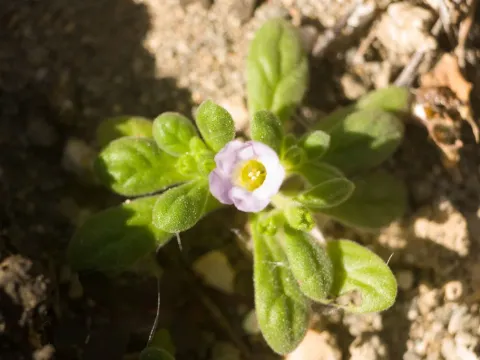
Nama
Nama
The genus Nama belongs to the Boraginaceae family. These plants are primarily herbaceous or small subshrubs that have evolved to thrive in extremely arid environmental conditions across their native ranges in the Americas.
What the section contains


Nama
In their natural habitat, which spans desert and semi-desert regions, these plants exhibit remarkable resilience to prolonged drought. They thrive in open, high-light environments and are specifically adapted to intense sun exposure.
The soil requirements for the genus include excellent drainage and low organic matter content. These plants are highly susceptible to moisture retention in the root zone, which frequently results in rapid development of root rot and total crop failure.
Optimal growth temperatures generally range between 20 and 30 degrees Celsius. The culture demonstrates significant tolerance to wide diurnal temperature fluctuations, which are common in their native mountainous or arid desert ecosystems.
Cultivation practices require the use of rocky or sandy substrates with neutral to slightly alkaline pH levels. Irrigation should be managed sparingly, focusing exclusively on root zone application to prevent fungal issues on the pubescent foliage.