
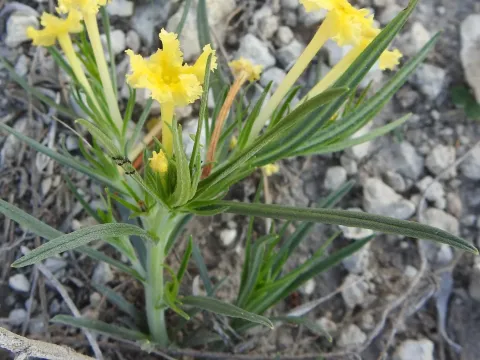
Narrow-leaf stoneseed
Lithospermum incisum
Narrow-leaf stoneseed (Lithospermum incisum) is a perennial plant belonging to the Boraginaceae family. It is valued for its hardiness and adaptation to arid environments.
What the section contains
Narrow-leaf stoneseed
The seeds should be sown in early spring or late autumn. Autumn sowing is often preferred to allow the seeds to undergo natural stratification over winter.
If spring sowing is planned, seeds must be cold-stratified for at least 30 to 60 days to break dormancy and ensure uniform germination.
The seeds should be sown at a depth of 0.5–1 cm in a well-draining, loose soil mix to prevent rot and facilitate emergence.
Spacing between plants is crucial for healthy root development, typically requiring 30–40 cm to allow for proper aeration and growth.
This species thrives in full sun, requiring exposure to bright sunlight throughout the day for optimal metabolic activity and blooming.
Soil requirements are strict regarding drainage; the plant prefers sandy, rocky, or gravelly soils that do not hold excess water after rain.
The plant is highly drought-tolerant once established, making it suitable for xeriscaping or cultivation in dry climates with poor soil quality.
Neutral to slightly alkaline soil pH levels are preferred, mimicking the natural limestone-rich habitats where this plant commonly occurs.
Minimal fertilization is required; in fact, overly fertile soil may cause the plant to become leggy and less resistant to environmental stresses.
The most significant threat is root and crown rot, which occurs in poorly drained soils during wet conditions or over-irrigation.
Aphids and spider mites are common insect pests that can attack the foliage, particularly during extended heat waves or periods of plant stress.
Powdery mildew may appear on leaves if the plant is grown in areas with high humidity and poor air circulation, reducing its ornamental value.
Integrated pest management, including regular inspection and the use of appropriate fungicides or insecticides, is recommended for healthy crop maintenance.
Keeping the area around the plants free from weeds is essential to prevent competitive stress and the spread of pathogens between plant species.