
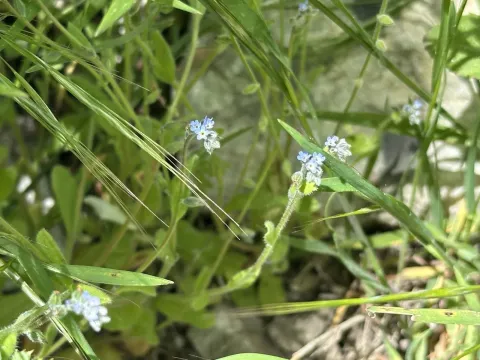
Myosotis minutiflora
Myosotis minutiflora
Myosotis minutiflora, commonly known as the small-flowered forget-me-not, is a member of the Boraginaceae family. It is an annual herbaceous plant often found in meadows or managed landscapes where early spring blooms are desired.
What the section contains
Myosotis minutiflora
Sowing should be scheduled for late autumn, allowing for natural winter chilling, or early spring as soon as the soil becomes workable. Seeds should be sown at a shallow depth of approximately 0.5 to 1 cm to ensure proper light exposure, which is critical for germination.
For efficient crop establishment, a seeding rate providing a moderate density is recommended. If used as a cover or ornamental crop, broadcast sowing can be employed, though row seeding with 15–20 cm spacing allows for better maintenance.
Germination is generally rapid under favorable moisture conditions. During the early seedling stage, consistent soil moisture is essential to prevent the delicate root system from desiccating during dry spring spells.
The plant exhibits a vigorous growth habit, allowing it to quickly establish itself and crowd out competing weeds if the stand is managed correctly from the outset of the growing season.
This species thrives in well-drained, loam or sandy soil types that provide moderate fertility. It is highly intolerant of waterlogged conditions, which frequently lead to the development of fungal pathogens in the root zone.
Light requirements are significant; Myosotis minutiflora prefers sunny locations to maximize its flowering potential. While it can survive in partial shade, excessive lack of light will result in etiolated, weak stems and reduced floral production.
The ideal soil pH for this culture is neutral to slightly acidic, typically ranging between 6.0 and 7.0. Adjusting the soil chemistry if necessary before sowing can significantly improve nutrient uptake and overall plant vigor.
The plant is climate-adapted to temperate regions, demonstrating good tolerance to cool weather and light spring frosts. It performs best in regions where spring is characterized by moderate temperatures and sufficient rainfall.
Water management is crucial. While the plant prefers moisture, irrigation should be applied carefully to avoid surface compaction and standing water. Drip irrigation or gentle overhead watering is ideal for maintaining the required soil hydration levels.
Powdery mildew is a primary concern for Myosotis minutiflora, particularly when plants are grown in high-density patches with restricted air circulation. Proper spacing and airflow are the most effective non-chemical preventative measures.
Gray mold (Botrytis) can impact the crop during periods of prolonged wet weather. Integrated pest management strategies involve removing any decaying plant tissue immediately and ensuring that the field remains free of debris.
Aphids are the most common insect pests encountered on this crop, typically targeting the succulent parts of the stems and developing flower buds. Early detection is key, and insecticidal soaps can often provide effective control in organic-based systems.
Flea beetles may cause aesthetic and physiological damage to the foliage during the early vegetative phase. Monitoring the field for signs of leaf pitting and applying registered insecticides when necessary will help protect the crop integrity.
Root-knot nematodes are potential soil-borne threats. Maintaining a strict rotation cycle, avoiding successive planting on the same plot, is the best strategy to minimize soil-borne pathogen and nematode accumulation over time.