
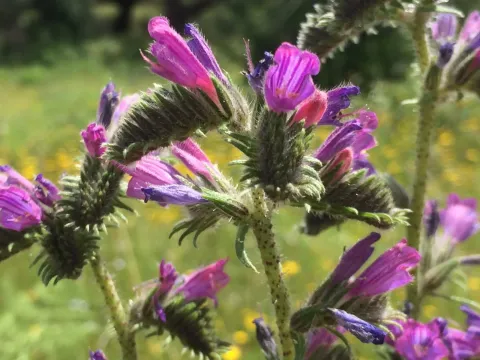
Echium tuberculatum
Echium tuberculatum
Echium tuberculatum is a herbaceous plant belonging to the Boraginaceae family. It is typically sown in early spring when the soil has sufficiently thawed and warmed up to ensure optimal germination rates.
What the section contains
Echium tuberculatum
Alternatively, autumn sowing can be performed before the onset of the first frosts. This method allows the seeds to undergo natural stratification, leading to more uniform germination in the following spring.
The seeding rate ranges from 5 to 7 kg per hectare. Because the seeds are quite small, they should be placed at a depth of 1 to 2 centimeters to provide adequate contact with the soil while ensuring they are not buried too deeply.
Proper field preparation is essential, including thorough leveling of the surface to facilitate uniform sowing depth. Compacted soils should be rolled after seeding to ensure optimal moisture retention around the seeds.
Seedlings typically appear within two to three weeks, depending on the temperature and moisture levels. During the first growing season, the plant develops a robust leaf rosette which effectively outcompetes early weeds.
This species is highly demanding in terms of sunlight and requires open, well-lit locations to reach its full development potential. Shady areas are unsuitable for successful cultivation of this plant.
Echium tuberculatum is exceptionally drought-tolerant, making it suitable for regions with limited rainfall. Its deep taproot system allows it to extract water from deeper soil layers that are inaccessible to many other crops.
The plant thrives in light, sandy or gravelly soils with a neutral or slightly alkaline pH. It performs poorly in heavy, clay-rich, or waterlogged soils, which can lead to root system decay and poor development.
It is winter-hardy and can withstand significant temperature fluctuations, including harsh winters in temperate zones, provided there is some snow cover to protect the crown of the plant.
In terms of fertilization, the plant is relatively undemanding. While moderate amounts of potassium and phosphorus can stimulate growth, high nitrogen levels are generally avoided as they can reduce the plant's overall resilience.
The primary agricultural value of Echium tuberculatum lies in its exceptional nectar production. It is a highly sought-after plant in professional beekeeping, capable of yielding up to 500 kg of honey per hectare under ideal conditions.
The flowering period is extended, providing a consistent food source for honeybee colonies throughout the summer months. This reliability makes it a staple crop for improving the honey production of local apiaries.
Seed production is another aspect of its economic value, as demand for high-quality planting material for pollinator-friendly programs continues to grow globally among farmers.
Due to its high nectar potential, even small plots of this plant can significantly increase the productivity of nearby beehives, making it a valuable component in integrated farm management systems.
The honey produced from this plant is highly prized for its clarity and delicate flavor profile, often fetching a premium price in local agricultural markets.
Echium tuberculatum is naturally resistant to most common plant diseases. However, in periods of excessive humidity or poor air circulation, instances of powdery mildew may occur on the leaves.
Pests are generally not a significant concern for this species. Some leaf-feeding insects may cause minor damage to the rosettes during the early growth stage, but these rarely impact the overall health or yield.
The main threat to the crop is competition from invasive weeds. Maintaining clean inter-row spaces during the first year of the plant's life is critical for ensuring that the crop establishes successfully.
Waterlogging is a major physiological threat that can weaken the plant and encourage fungal infections. Proper drainage of the field remains the most important preventative measure against such issues.
The use of pesticides is strongly discouraged in the cultivation of this species, as it is primarily valued for its role in supporting pollinator health, making chemical safety a top priority.
Seed harvesting should take place when the seed heads turn brown and the seeds reach full maturity. Delaying the harvest can lead to significant shattering and yield loss due to the plant's natural tendency to disperse seeds.
For large-scale operations, mechanical harvesting with a combine is used, though it requires specific settings to handle the small seeds gently and minimize losses during the thrashing process.
After collection, the seeds must be immediately dried in a well-ventilated, shaded environment. Direct sunlight can decrease the viability and germination percentage of the seeds, so indoor drying is preferred.
Storage should occur in a cool, dry place to prevent moisture accumulation. Using breathable bags or containers is necessary to ensure the longevity and viability of the planting material for the next season.
In cases where the crop is grown purely as a honey source, harvesting is left to the bees, and no mechanical intervention is needed until the plant completes its biological life cycle.