
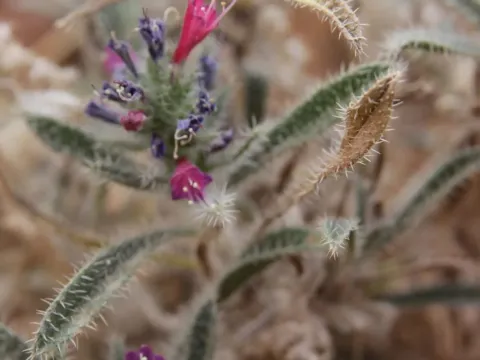
Echium pycnanthum
Echium pycnanthum
Echium pycnanthum, commonly known as a honey-producing plant, is a biennial herbaceous species belonging to the Boraginaceae family. Sowing is typically carried out in early spring, as soon as the soil reaches a temperature of 5-8 degrees Celsius, or in late autumn for winter survival.
What the section contains
Echium pycnanthum
Seeds are sown at a shallow depth of approximately 1.5 to 2 centimeters. The recommended sowing method is row cropping, maintaining a spacing of 45-60 centimeters between rows to ensure sufficient room for the rosette to develop during the first year of growth.
The seeding rate ranges between 4 and 6 kilograms per hectare. Proper field preparation, including compaction after sowing, is essential to ensure that seeds maintain close contact with the moist soil, which is vital for successful germination.
During the first year, the plant concentrates its energy on forming a large, robust basal rosette of leaves. The main stem and flower stalks develop in the second year. Weed control during this establishment phase is critical, as the plant grows slowly initially.
Due to its high winter hardiness, autumn sowing often yields excellent results, allowing the root system to establish itself before the arrival of the next growing season, leading to early spring development.
Echium pycnanthum is known for its remarkable adaptability and endurance in harsh environmental conditions. It thrives on poor, rocky, or sandy soils where many other agricultural crops would struggle to survive.
The plant prefers open, sunlit areas, as shade significantly reduces nectar production. This is a crucial factor to consider when planning a site, especially for beekeeping purposes where nectar flow is the priority.
While not demanding in terms of soil nutrients, the plant shows better growth in neutral or slightly alkaline soils. Its deep taproot system allows it to access moisture from deeper soil layers, making it highly drought-tolerant.
No irrigation is required under typical conditions, which minimizes cultivation costs. However, for maximum productivity, fertile loams or chernozem soils can lead to much stronger plant development and increased nectar yield.
Effective management requires protecting the crop from perennial weeds. Since the plant is vulnerable during the first year, keeping the area clear of competing vegetation is the most significant agronomic requirement for a healthy second-year bloom.
The primary agricultural and economic value of Echium pycnanthum lies in its extraordinary potential as a honey plant. Under favorable conditions, it can produce between 800 and 1000 kilograms of honey per hectare of cultivation.
Honey derived from this plant is highly prized for its flavor, high quality, and slow crystallization process. It is considered an excellent winter feed for bees, as it does not ferment easily and maintains its nutritional integrity.
The flowering period is remarkably long, lasting up to 50 days, which ensures a stable nectar supply for bee colonies throughout the mid-summer season. This longevity makes it an ideal choice for commercial apiaries.
Beyond its role in beekeeping, the plant is used in landscape design and for soil erosion control on slopes. Post-harvest, the organic matter from the plants contributes to soil enrichment when turned into the ground.
When grown for seed production, yields typically range from 3 to 6 centners per hectare. The final outcome depends heavily on the activity of pollinators and favorable weather patterns during the flowering stage.
Echium pycnanthum possesses strong natural resistance to most common pests. Its stems and leaves are covered in stiff, bristly hairs, which act as a physical deterrent against many insects, making it unattractive to herbivores.
In excessively humid years, the crop may be susceptible to fungal diseases like powdery mildew. Preventive measures such as crop rotation and avoiding overly dense plantings to ensure good airflow are the most effective management strategies.
Soil-dwelling pests, such as wireworms, can occasionally damage seedlings during the early stages of life. However, once the plant is established, it rarely requires any chemical intervention for protection.
Weed competition is the greatest threat to the crop's establishment. Mechanical weeding is the standard approach, as it is simple and effective without the need for harmful synthetic chemicals that could endanger bee populations.
Chemical protection is generally discouraged because the plant is a critical forage source for honeybees. Any use of pesticides poses a significant risk to the pollinators, necessitating a strictly non-chemical or biological approach to maintenance.
Harvesting Echium pycnanthum seeds is a delicate process due to the uneven maturation of the inflorescences. Since the flowers bloom and ripen from the bottom up, seeds tend to drop naturally, necessitating careful timing.
The harvest should begin when the majority of seeds in the middle and lower parts of the inflorescence have turned a characteristic dark brown color. This indicates that the seeds have reached peak maturity.
A two-stage harvesting method is most effective: mowing the plants into windrows, allowing them to ripen further in the field for a few days, followed by threshing to maximize the yield of viable seeds.
Once harvested, the seeds must be cleaned and thoroughly dried to a moisture content of 10-12%. Storage should take place in dry, well-ventilated facilities to prevent mold development and loss of germination energy.
Proper threshing techniques are vital to keep the seed coat intact, as damaged seeds show significantly lower germination rates during the next sowing season, impacting overall crop success.