
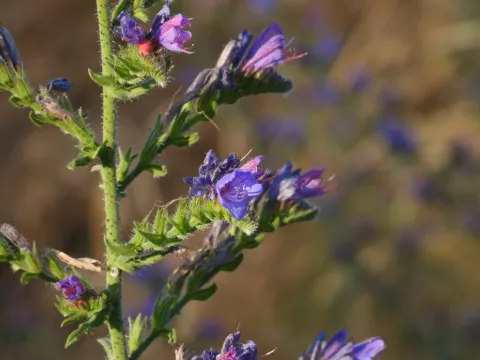
Echium gaditanum
Echium gaditanum
Echium gaditanum is an herbaceous plant belonging to the Boraginaceae family, often selected for its adaptability to Mediterranean-type climates.
What the section contains
Echium gaditanum
The optimal sowing time is early spring, which allows the plant to establish a robust root system before the onset of summer heat and drought.
Seeds should be sown at a shallow depth of approximately 1 to 2 centimeters to ensure adequate moisture contact and quick emergence of seedlings.
For uniform stand density, precision seeding equipment is recommended, especially when the crop is grown for industrial honey production purposes.
Seedbed preparation requires a fine, firm soil structure to facilitate consistent germination rates across the entire planted field area.
This species thrives in full sun exposure, which is critical for biomass development and the stimulation of nectary secretion in the flowers.
The crop demonstrates exceptional resilience to arid conditions and is well-suited to soils with low water-holding capacity or rocky substrates.
It prefers neutral to slightly alkaline soil pH and requires excellent drainage to prevent root diseases that are common in waterlogged environments.
Echium gaditanum is not demanding regarding nutrient inputs and can grow successfully in low-fertility soils without significant mineral fertilization.
Providing sufficient spacing between plants helps maintain airflow, which is essential to minimize the risk of humidity-related fungal issues.
The primary economic value of Echium gaditanum lies in its high honey yield potential, making it a valuable asset for commercial apiculture operations.
The duration of the flowering period is a significant advantage, providing a stable source of forage for pollinators throughout the peak season.
In addition to apiculture, research focuses on its use in land restoration projects, where it helps prevent erosion on steep and degraded slopes.
Yields of vegetative biomass can be managed through sowing density to optimize the plant's performance in specific agro-ecological zones.
Seed production is an important secondary objective for growers aiming to achieve self-sufficiency in high-quality planting material for future cycles.
Root pathogens represent the most significant threat to the crop, particularly when soil moisture levels exceed the plant's threshold tolerance.
Insect pests that target floral parts can reduce the overall honey production, necessitating careful monitoring during the active blooming period.
Fungal diseases like powdery mildew may develop under conditions of high relative humidity, especially in fields with inadequate plant spacing.
Weed competition during the early stages of growth must be controlled to prevent stunting of the young Echium gaditanum plants.
- Root rot caused by poor soil drainage
- Powdery mildew in dense stands
- Bud-damaging insects
- Early-stage weed competition
Harvesting the seed requires strategic timing, as the capsules tend to ripen progressively from the base to the top of the inflorescence.
The most effective method involves swathing when the majority of the seeds reach maturity to minimize losses from natural shattering.
Post-harvest processing includes thorough cleaning and immediate drying to prevent the buildup of moisture within the harvested seed batch.
Proper storage in cool, dry conditions is vital to preserve seed viability for long-term usage or commercial trading purposes.
Careful machinery adjustments during threshing are necessary to avoid mechanical damage to the seeds, ensuring high germination potential.