
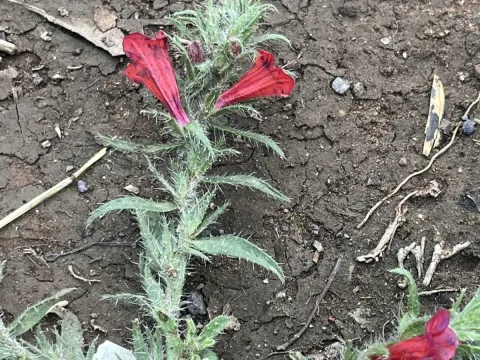
Echium horridum
Echium horridum
Echium horridum, a member of the Boraginaceae family, is a biennial or perennial herbaceous plant known for its hardiness. In agricultural settings, sowing is typically conducted in early spring as soon as soil temperatures allow, ensuring the seedbed is well-prepared and loosened.
What the section contains
Echium horridum
The seeds should be sown at a shallow depth of approximately 1.5 to 2 centimeters to ensure consistent germination. Maintaining uniform row spacing, typically between 30 and 45 centimeters, is essential for effective inter-row cultivation and weed management during the initial growth stages.
Due to the hard seed coat, stratification or priming techniques may be employed to improve field emergence. The crop is also well-suited for late-autumn sowing in specific climates, which often results in earlier growth during the subsequent spring season.
Field selection should prioritize sunny, open areas, as Echium horridum is a heliophilous species that performs poorly under shade. Its high tolerance for various soil types allows for planting on marginal lands, contributing to efficient land management.
Adherence to recommended seeding rates is vital for achieving an optimal plant population, which in turn maximizes the productivity of the stand and ensures high-quality plant development throughout the vegetative cycle.
This crop thrives in poor, rocky, or sandy soil conditions where conventional crops struggle, demonstrating exceptional versatility. It prefers neutral to slightly alkaline soil types, which are characteristic of many semi-arid regions.
Adequate soil drainage is the most critical environmental requirement for Echium horridum. Its deep taproot system is sensitive to waterlogging and soil compaction, making well-drained slopes or elevated ground ideal locations for cultivation.
Climatic requirements involve moderate heat and consistent sunlight throughout the blooming period. As a xeric species, it is highly drought-tolerant, utilizing physiological adaptations to maintain vigor despite prolonged periods of low precipitation.
Fertilization regimes should be kept conservative; excessive nitrogen application can lead to rank vegetative growth while potentially reducing nectar production. Phosphorus and potassium applications are preferred to strengthen the root system and enhance overall stress resistance.
The plant exhibits excellent winter hardiness, provided a healthy basal rosette has been established by the end of the first growing season, allowing it to withstand frost effectively before blooming in the second year.
The primary agricultural utility of Echium horridum is its status as a high-performance honey plant. Its nectar productivity is superior to many traditional crops, making it a highly valuable asset for commercial beekeeping operations.
Under optimal conditions, the crop can yield several hundred kilograms of honey per hectare, characterized by a slow crystallization rate and high consumer demand. This makes it a foundational species for establishing nectar flow in arid agricultural landscapes.
Beyond beekeeping, Echium horridum serves a vital function in soil conservation and erosion control. Its extensive root architecture stabilizes topsoil on sloping or disturbed land, preventing runoff and degradation.
The plant is also of interest to the pharmaceutical and botanical industries, as its tissues contain various bioactive compounds, including alkaloids, which are studied for their potential antiseptic and anti-inflammatory properties.
Economic viability is driven by low input requirements, as the plant demands minimal irrigation, limited pest control, and no specialized harvest machinery beyond standard seed cleaning equipment, favoring cost-efficient farm management.
Leaf-eating pests, such as various weevil species, pose a threat to young seedlings and the basal rosette. Regular monitoring is advised, with intervention only necessary if the population thresholds indicate significant developmental delay.
Fungal diseases, including powdery mildew, can emerge during periods of high humidity or excessive stand density. The primary control method is cultural, focusing on proper spacing to ensure adequate air circulation and prevent moisture accumulation.
Weed competition is primarily a concern during the first year of growth. Maintaining clean rows through mechanical cultivation or careful hand-weeding provides the seedlings the space needed to establish their robust root systems.
Root rot pathogens are a localized concern in fields with inadequate drainage. Proper site selection and avoiding water-retentive, heavy clay soils are the most effective preventive measures against these soil-borne threats.
Pest damage to floral parts can impact nectar production, so field scouting during the budding phase is recommended to assess the health of the reproductive organs and ensure the viability of the flowering cycle.
For seed production, harvesting begins when the lower portion of the flower spikes turns brown, signaling seed maturity. Timing is critical to prevent shattering, as the seeds lose their connection to the receptacle quickly upon maturation.
Harvesting should be performed during dry weather using combines set to low drum speeds to minimize mechanical damage to the seeds, which helps maintain high viability and germination rates in future seasons.
Post-harvest drying must occur in a well-ventilated, shaded environment to prevent degradation of chemical components and maintain natural color. Exposure to direct sunlight must be strictly avoided during the drying process.
Cleaning and calibration are performed using standard seed cleaning equipment with air aspiration to remove light debris and weed seeds. This ensures the delivery of a clean, high-grade batch of seeds ready for market or storage.
When the crop is used strictly as a honey source, the harvest cycle refers to the extraction of honey from the hives rather than harvesting the crop itself, allowing the biomass to remain in the field as an active ecosystem support.