
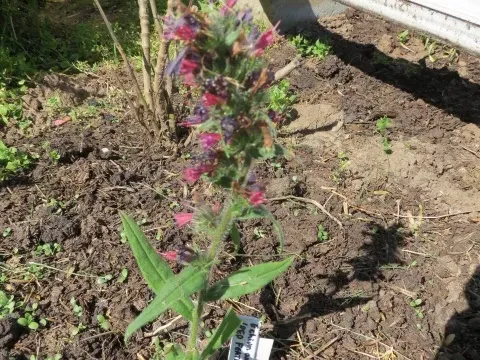
Echium amoenum
Echium amoenum
Echium amoenum, a member of the Boraginaceae family, is a valuable perennial plant often cultivated for its high nectar production. Sowing is typically performed in early spring once the soil temperature consistently reaches 8–10 degrees Celsius, or in late autumn for natural seed stratification.
What the section contains
Echium amoenum
For successful establishment, the seedbed must be prepared to a fine, crumbly consistency. Due to the small size of the seeds, they should be sown at a shallow depth of approximately 1.5 to 2 centimeters to ensure successful germination.
The standard seeding rate varies depending on the sowing method, generally ranging from 5 to 8 kilograms per hectare. Proper spacing is essential, with row distances typically set at 45 to 60 centimeters to facilitate weed control.
Seedlings usually emerge within 10–14 days, provided there is adequate soil moisture. During the first year, the plant focuses on developing a robust basal leaf rosette and a deep taproot system, preparing it for vigorous growth in subsequent seasons.
Uniform distribution of seeds is critical to minimize intra-species competition. Mechanical sowing equipment should be calibrated to ensure consistent depth and density across the entire field.
This species is highly adaptable and thrives in conditions where other crops might fail, including rocky, sandy, or nutrient-poor soils. It is particularly valued for its drought tolerance and minimal demand for irrigation.
Echium amoenum requires full sun exposure to maintain optimal nectar secretion. Shaded areas significantly inhibit flower development and reduce the overall attractiveness of the crop to pollinators.
While tolerant of various soil types, the plant prefers well-drained, slightly alkaline, or calcareous soils. It is intolerant of waterlogged conditions, which can lead to root diseases and plant death.
The plant is known for its exceptional winter hardiness, allowing it to withstand harsh temperatures and survive various climatic stressors during its multi-year life cycle.
Fertilization should be managed carefully. Excessive nitrogen can promote vegetative growth at the expense of floral development, while phosphorus and potassium applications are generally more effective in boosting nectar yields.
The primary agricultural utility of Echium amoenum lies in its exceptional nectar-producing potential, making it a premier choice for honey production. It provides a long flowering period that supports healthy bee colonies.
Honey produced from this species is highly regarded for its light color, delicate flavor, and slow crystallization process, which commands a premium price in the commercial honey market.
Beyond beekeeping, the plant is studied for its medicinal properties. Certain compounds found in the flowers and leaves have applications in herbal medicine, particularly for their soothing and anti-inflammatory characteristics.
Echium amoenum serves as an excellent forage resource in arid and semi-arid agricultural regions, where conventional honey crops require excessive water and intensive maintenance.
A well-maintained field can remain productive for up to five years. Its ability to regenerate from the taproot after winter allows for stable yields with limited investment in re-seeding operations.
While generally hardy, the crop is susceptible to fungal infections like powdery mildew, particularly in humid or stagnant air environments where moisture persists on the foliage for extended periods.
Root rot is a major threat in fields with heavy, poorly drained clay soils. Proper field selection and soil drainage are the most effective preventive measures against these pathogens.
Insect pests, including various leaf-chewing larvae and sap-sucking bugs, can damage flower stalks and reduce nectar flow. Integrated pest management strategies are advised to protect the yield.
Weed management during the first year of growth is crucial for successful establishment. Early-stage competition can easily overwhelm young Echium seedlings, so timely mechanical inter-row cultivation is essential.
To prevent disease outbreaks, growers should avoid overcrowding the plants. Maintaining appropriate density ensures good air circulation, which helps keep the foliage dry and reduces the risk of fungal spread.
When grown for herbal purposes, the flowering tips are harvested at the peak of bloom. Harvesting must occur on a dry, sunny day to ensure the highest quality and concentration of active substances in the raw material.
Only the flowering tops should be collected, avoiding the woody portions of the stem, which provide little therapeutic value and can negatively impact the final product's quality.
Drying should take place in well-ventilated, shaded areas at temperatures not exceeding 40 degrees Celsius. Exposure to direct sunlight during the drying process should be avoided to prevent the degradation of essential compounds.
Seed harvesting requires careful timing as maturation is uneven across the flowering spike. Growers typically wait for the lower seed pods to turn brown before proceeding with mechanical or manual harvest.
Following the active blooming season, the plants can be mowed down to the base to encourage fresh growth for the next season and to clear away dead vegetation that might harbor pathogens during winter.