
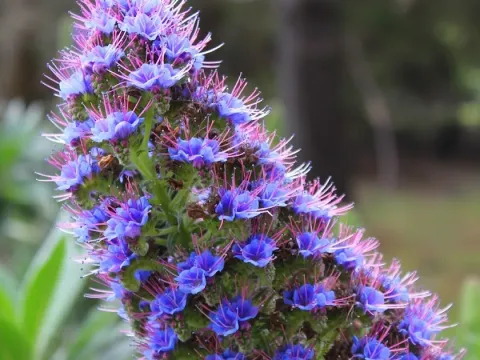
Echium fastuosum
Echium fastuosum
Echium fastuosum, widely known as the Pride of Madeira, is a member of the Boraginaceae family. In agricultural and ornamental practice, sowing is typically carried out in spring once the danger of frost has passed to ensure steady germination.
What the section contains
Echium fastuosum
Seeds should be sown at a depth of 1 to 2 centimeters in well-drained, fertile soil. Providing adequate spacing is essential to allow for the significant horizontal spread of the plant as it matures into its shrub-like form.
Direct seeding in open fields requires a weed-free environment during the early growth stages, as young seedlings are sensitive to competition. Pre-treating the soil or utilizing mulching techniques can improve initial development rates significantly.
For greenhouse or container propagation, seeds are sown in individual modules to facilitate root development before transplanting. Ensuring a stable temperature range between 18 and 22 degrees Celsius is ideal for uniform germination.
The plant demonstrates vigorous growth following the initial establishment phase. Proper placement of seeds ensures that each individual plant has sufficient resources, preventing overcrowding that could lead to stunted growth or weak flower spikes.
Echium fastuosum thrives in full sun, which is necessary for maximizing its floral output and structural integrity. Shade-grown specimens often develop elongated, weak stems and produce fewer blossoms, reducing their overall utility.
The species prefers well-drained, sandy or gravelly soils that mirror its native habitat. It is highly intolerant of waterlogged conditions, which frequently lead to root rot and other fatal physiological disorders.
This crop is remarkably drought-tolerant once established, making it suitable for regions with prolonged dry seasons. It utilizes water efficiently, requiring only moderate irrigation during the most intense phases of its reproductive cycle.
Soil pH should ideally be neutral or slightly alkaline. Unlike many other field crops, Echium fastuosum performs well in nutrient-poor soils, and excessive fertilization often negatively impacts the plant's natural habit and health.
Protection from high winds is recommended, particularly during the flowering season. While the plant is robust, its tall, heavy spikes can be damaged or broken under extreme wind pressure, necessitating strategic field selection.
The most significant threat to the health of Echium fastuosum is root rot, primarily driven by poor soil drainage and over-irrigation. This condition is often irreversible once symptoms manifest in the foliage.
Aphids are the most common insect pests, particularly affecting new growth and inflorescences. Integrated pest management, including the use of biological predators, is highly effective in maintaining healthy plant stands.
Powdery mildew may occur in regions with high humidity or poor air circulation. This fungal disease creates a white, dusty layer on the leaves, which inhibits photosynthesis and weakens the plant's overall vigor.
Grey mold (Botrytis) can damage the flowers during periods of excessive rain, affecting nectar quality and overall plant aesthetic. Proper thinning and weed control are essential measures to ensure adequate airflow within the crop stand.
Soil-borne nematodes can pose a risk, especially in fields used repeatedly for the same species. Proper crop rotation and soil sanitation are critical to preventing the buildup of these pathogens and ensuring long-term yield success.