
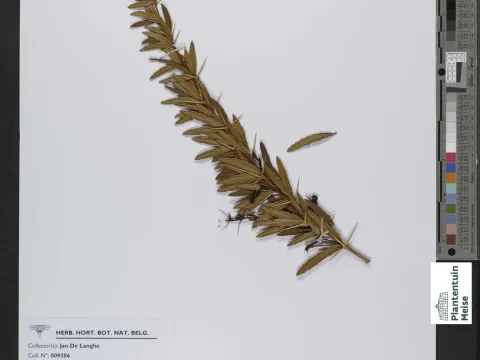
Panlan barberry
Berberis panlanensis
The Panlan barberry (Berberis panlanensis) is an ornamental deciduous shrub belonging to the Berberidaceae family. Native to the mountainous terrains of China, particularly in the Sichuan province, this species is noted for its distinct foliage and architectural form.
What the section contains
Panlan barberry
Cultivation requires well-draining soil types, as the plant is sensitive to waterlogged conditions which can lead to root decay. Loamy or sandy soil compositions are ideal for supporting the fibrous root system of this species.
The plant thrives in full sun exposure, which is crucial for maximizing its ornamental potential. While it can tolerate partial shade, insufficient light often results in diminished foliage coloration and a more sparse, leggy growth habit.
Regarding climate, this barberry prefers temperate conditions with adequate seasonal moisture. While it shows decent hardiness, providing a mulch layer around the base is recommended during the first few years to protect the roots from harsh freezing cycles.
Routine maintenance includes structural pruning, which is best performed in early spring or after the flowering period. This promotes denser branching and ensures that the shrub maintains a neat, compact appearance in the landscape.
Powdery mildew represents a primary fungal threat to the Panlan barberry, particularly in humid and stagnant air environments. This disease covers the foliage with a whitish coating, hindering photosynthesis and overall vigor.
Barberry rust is another significant pathogen that can impact the health of the plant. It manifests as pustules on the leaf underside, leading to premature leaf drop and the potential for secondary infections in weakened specimens.
Insects like the barberry aphid are common pests that colonize tender new growth. Feeding damage results in leaf curling and localized yellowing, which significantly detracts from the shrub's ornamental value.
Effective management involves integrated pest control measures, including the application of dormant oil sprays in early spring to eliminate overwintering eggs and the use of targeted fungicides upon the first sign of infection.
Maintaining a healthy environment through proper spacing and sanitation is the best defense against threats. Removing fallen leaves under the canopy prevents the re-infection cycle of many localized fungal pathogens.