
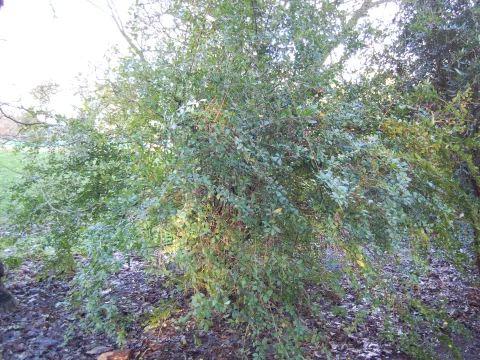
Nepal Barberry
Berberis chitria
Nepal Barberry (Berberis chitria) is a significant shrub species within the Berberidaceae family, indigenous to the Himalayan region. Often found at high altitudes in Nepal and India, this plant has adapted to survive in diverse mountain climates. Its robust nature makes it an interesting subject for both botanical research and specialized agricultural cultivation.
What the section contains
Nepal Barberry
Botanically, it is recognized by its evergreen foliage and long, drooping clusters of bright yellow flowers that bloom in late spring. The plant can reach a significant height, forming dense, spiny thickets that provide excellent cover. The red, elongated berries produced after flowering are a hallmark of this species, often used in local traditional medicine and culinary practices.
Regarding cultivation requirements, Berberis chitria thrives in well-drained, nutrient-rich soils with a slightly acidic to neutral pH. It performs best in sites with full sun exposure, although it can tolerate light shade in warmer climates. Sufficient spacing is required to ensure good airflow, which is essential for maintaining the health of the dense foliage and preventing humidity-related issues.
Agrotechnical management involves regular pruning to maintain the desired shape and size, especially when used as a hedge. Fertilization with balanced NPK formulas should be done during the early spring to promote vigorous new growth. During the first two years of establishment, consistent irrigation is crucial, although established plants show a good degree of tolerance to minor droughts.
In terms of economic utility, Nepal Barberry is highly valued as an ornamental plant due to its dramatic seasonal changes and long-lasting berries. Beyond aesthetics, the plant contains active alkaloids like berberine, which are widely studied for their medicinal properties. The berries are also harvested for use in artisanal food products, adding value to its agricultural status.
The primary threats to Berberis chitria health include powdery mildew and fungal rusts, which thrive in stagnant, humid environments. Maintaining adequate space between plants is the most effective cultural control method. Additionally, pests such as aphids and scale insects may infest the branches, necessitating the use of targeted horticultural oils or insecticides when necessary to protect the plant's vitality.