
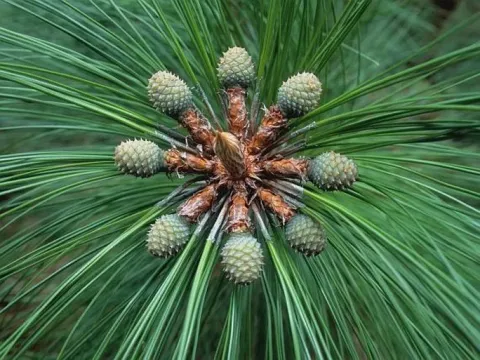
Benguet pine
Pinus insularis
Sowing seeds of the Benguet pine is typically performed in early spring when ground temperatures reach optimal levels. This timing ensures that seedlings have sufficient time to establish a robust root system before the onset of the next winter or dry season.
What the section contains
Benguet pine
Seeds are often subjected to stratification to break dormancy, which mimics the natural winter conditions. This practice leads to a higher and more uniform germination rate, which is essential for efficient nursery management.
The nursery soil must be well-drained and friable to prevent damping-off diseases. Seeds should be sown at a shallow depth of approximately 1-2 cm to provide enough contact with the soil while allowing the emerging sprout to reach the surface easily.
During the initial phase, seedlings require protection from excessive heat and direct sunlight. Regular moisture control is critical, as both waterlogging and severe drought can cause significant mortality in young plants.
Seedlings are usually ready for field transplantation after 1 to 2 years of care. By this time, they have developed the necessary hardiness to withstand the environmental stressors found in their natural habitat.
The Benguet pine is a highly photophilous species, meaning it requires significant amounts of sunlight to grow properly. Shade-heavy environments are detrimental to its development and can cause stunted growth and malformation of the crown.
This tree is native to tropical and subtropical mountain ranges, where it thrives in high-humidity conditions. It is well-adapted to the distinct temperature variations between day and night typical of high-altitude islands.
Regarding soil preferences, this species grows well in light, slightly acidic, and well-aerated substrates. It shows excellent performance on rocky or thin soils, which makes it a preferred species for reforestation of degraded mountainous slopes.
Effective management of this crop requires adequate rainfall, although it possesses a degree of drought tolerance once established. However, consistent moisture availability is necessary during the early stages of sapling growth.
Proper spacing during planting is vital to ensure that every tree receives enough light and nutrients. Overcrowding can lead to increased competition, lower growth rates, and increased susceptibility to various forest diseases.
The primary economic use of the Benguet pine is for the production of high-quality softwood timber. The wood is valued for its versatility, strength, and ease of mechanical processing in various construction applications.
Resin tapping is another traditional and economic use for this species. This practice allows for long-term yields from the same stand without the need for early harvesting, providing a sustainable income stream for forest managers.
The growth rate of the Benguet pine is relatively fast compared to other highland conifers, making it a productive choice for commercial forestry plantations. Yield potential is maximized through careful selection of planting sites and management.
In addition to timber and resin, the species is essential for environmental services, such as soil erosion control and water shed protection. Its deep root system helps stabilize slopes, which is highly beneficial for local ecosystems.
Sustainable harvesting techniques, including thinning and selective logging, are recommended to maintain the health of the stand while meeting industrial demand for wood products and cellulose raw materials.
Fungal pathogens in nurseries represent a significant threat to young seedlings. Implementing strict hygiene practices and using appropriate fungicides is standard procedure to ensure healthy sapling production.
Bark beetles and pine borers are known pests that can infest weakened trees. Maintaining forest hygiene by removing dead or dying timber helps prevent large-scale outbreaks that could devastate a plantation.
Wildfires are arguably the greatest risk for Benguet pine forests, especially in regions with prolonged dry seasons. The accumulation of needles on the forest floor creates a high fuel load, necessitating the creation of firebreaks.
Increased human activity in forest zones often leads to unintentional damage through illegal grazing or land clearing. These pressures require protective measures and active management to ensure the longevity of the population.
Climatic change, which alters precipitation patterns, can also increase the susceptibility of the trees to secondary pest attacks. Regular monitoring of tree health is essential for early detection of stress factors.