
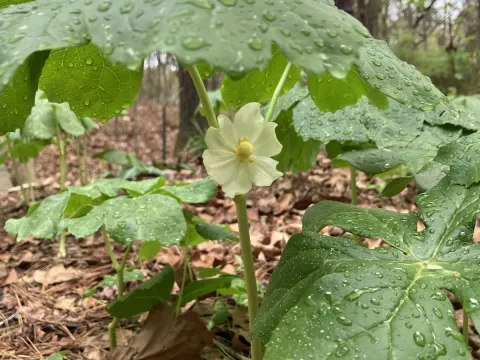
Podophyllum
Podophyllum L.
Podophyllum is typically propagated through rhizome division, as this method ensures the preservation of plant characteristics and leads to faster establishment.
What the section contains


Podophyllum
The ideal time for division is early spring before new growth appears, or in early autumn once the foliage begins to senescence naturally.
Rhizomes should be planted in loose, organic-rich soil at a depth of 5–8 centimeters, spacing them appropriately to allow for natural spread.
If seeds are used, they require a cold stratification period; thus, sowing in autumn directly in outdoor beds is the most effective approach for germination.
Ensuring correct planting depth and soil moisture is essential for root system development and the long-term health of the medicinal plant stand.
As a member of the Berberidaceae family, Podophyllum thrives in cool, moist, and shaded environments typical of woodland areas.
The soil must be well-drained but have high water-holding capacity, enriched with plenty of leaf mold, compost, or other decomposed organic matter.
The plant performs best in soils with a slightly acidic to neutral pH, which facilitates the optimal uptake of minerals and nutrients.
Shade management is crucial, as direct sunlight can easily scorch the leaves and significantly inhibit the plant's metabolic processes.
Consistent moisture is necessary, especially during the spring growth flush, although stagnant water must be avoided to prevent rhizome rot.
The economic value of Podophyllum is determined by the concentration of medicinal alkaloids, primarily podophyllotoxin, found in the rhizomes.
A typical production cycle lasts several years, with the first harvest usually occurring 3 to 4 years after the initial planting of the field.
Yields are influenced by soil fertility, the quality of the planting stock, and the level of management given to the plantation over time.
Regular mulching and weed control are essential practices to ensure that the plants have minimal competition for nutrients and water.
Harvestable yields reach their peak when the rhizome density is high and the plants have completed several full seasons of growth.
Fungal pathogens such as leaf spot and various rots are the most common issues, particularly when planting density is too high or drainage is poor.
Slugs and snails pose a major threat to the foliage in early spring, often requiring integrated pest management or manual collection.
Providing adequate ventilation by maintaining proper plant spacing is an effective strategy to mitigate the risk of disease outbreak.
Spider mites can become a problem in drier seasons, necessitating monitoring and the use of targeted treatments if the infestation threshold is reached.
Maintaining high plant hygiene, including the removal of dead or infected debris, is vital for a healthy and productive crop.
Harvesting of the rhizomes is carried out in the autumn after the aerial portions of the plant have completely yellowed and died back.
The roots are carefully unearthed, cleaned of excess soil, and inspected for any signs of decay before processing begins.
After harvesting, the rhizomes are washed and cut into smaller, manageable pieces to ensure uniform drying in controlled conditions.
Drying is performed at low to moderate temperatures to prevent the degradation of the delicate phytochemicals that make the plant valuable.
Stored raw material should be kept in cool, dry, and dark conditions to maintain its potency until it is ready for pharmaceutical extraction.