
Nandina
Nandina
Nandina (Nandina domestica), commonly known as heavenly bamboo, belongs to the Berberidaceae family. Despite its common name, it is not a bamboo, but an evergreen shrub native to Eastern Asia, ranging from the Himalayas to Japan.
What the section contains

Nandina
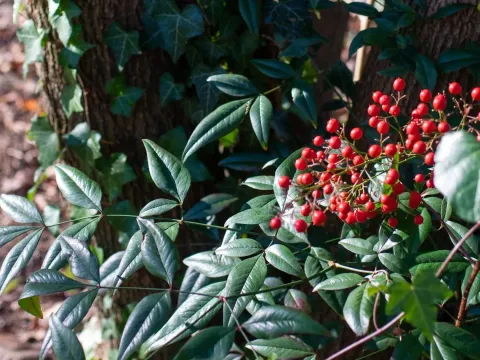
Botanically, the plant is characterized by its cane-like stems and complex, compound leaves. It produces panicles of small white flowers in the summer, which develop into bright red berries that persist through the winter months, serving as a primary ornamental feature.
Nandina thrives in temperate climates, ideally in USDA zones 6–9. It prefers locations with full sun to partial shade. While it has some drought tolerance once established, it performs best in moisture-retentive, well-draining soils with a slightly acidic pH.
Agricultural management includes consistent watering during the establishment phase and annual mulching to regulate soil temperature and moisture. Fertilization is generally applied in early spring to support the new flush of foliage.
The economic value of Nandina is strictly limited to the nursery and landscape industry. It is prized for its year-round visual interest and adaptability to various garden styles, including formal hedges and container arrangements.
Fungal pathogens such as leaf spot are the most common diseases affecting Nandina. These infections typically emerge during prolonged periods of high humidity and rainfall, which compromise the plant's aesthetic and physiological integrity.
Insects, particularly scale insects and mealybugs, are frequent pests. These sap-sucking organisms cluster on stems and leaf axils, causing stunted growth, leaf yellowing, and the accumulation of sooty mold on the honeydew they secrete.
Management of these pests requires a combination of horticultural oil applications and systemic insecticides during the crawler stages of the insect life cycle. Early detection is critical for preventing widespread infestation.
To maintain plant health, growers should prioritize cultural practices, including providing adequate spacing between plants to facilitate air movement and minimize the microclimate conditions that favor pathogen development.
Finally, producers must be aware that all parts of the Nandina plant contain cyanogenic glycosides. While the plant is hardy, it is considered toxic to various animals if ingested, which is an important factor in agricultural site planning.