
Perrald's barrenwort
Epimedium perralderianum
Description
Growing requirements
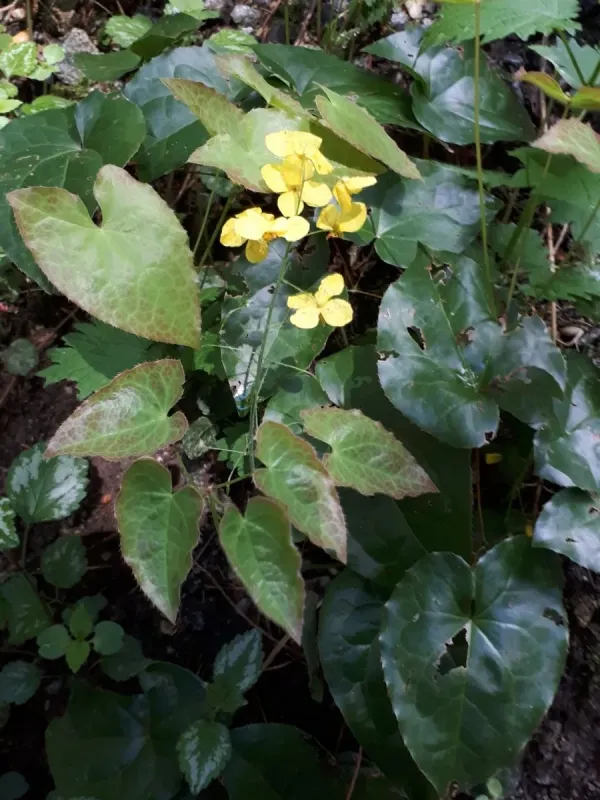
Perrald's barrenwort (Epimedium perralderianum) is a hardy perennial belonging to the Berberidaceae family. Native to the mountainous woodlands of Algeria, it is highly valued in ornamental horticulture for its evergreen, leathery foliage.
The plant features distinct heart-shaped leaves that often exhibit a beautiful bronze tint when young, turning deep green as they mature. Its yellow flowers appear in spring, adding significant visual interest to shade gardens.
This species thrives in woodland conditions, requiring sheltered areas with dappled sunlight. It is an excellent choice for planting beneath deciduous trees, where it mimics its natural mountain forest habitat.
Soil requirements focus on moisture retention and fertility. Ideally, the soil should be rich in leaf mold or well-rotted organic compost with a neutral to slightly acidic pH to ensure vigorous root development.
Maintenance is relatively low, requiring primarily periodic watering during prolonged dry spells and the removal of old leaves in early spring to make room for new, fresh growth before the flowering cycle begins.
Main diseases and pests
Although robust, the plant is susceptible to common garden pathogens such as gray mold (Botrytis) if air circulation is poor or if the planting site remains waterlogged for extended periods.
Root rot is a significant threat in heavy, compacted soils that do not allow for sufficient drainage. Proper site preparation with gritty additives or organic matter is essential for disease prevention.
The vine weevil (Otiorhynchus sulcatus) is a persistent pest; its larvae feed on roots and rhizomes, while adults notch the leaves, leading to severe plant stress and decline if not managed promptly.
Slugs and snails frequently target young, tender foliage during wet springs, causing unsightly holes. Regular monitoring of the foliage and application of perimeter barriers can help protect the plants.
To keep the plants healthy, it is recommended to apply a top dressing of organic mulch each year and manually remove any heavily infected leaves to limit the spread of potential fungal spores.