
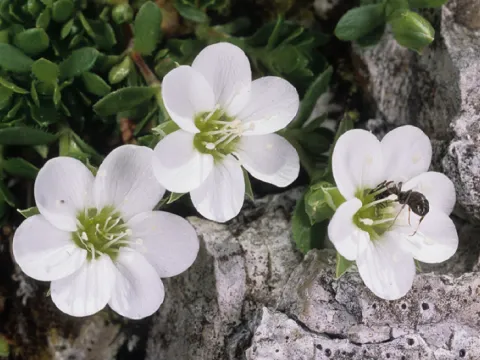
Bernese sandwort
Arenaria bernensis
Bernese sandwort (Arenaria bernensis) belongs to the Caryophyllaceae family and is a low-growing perennial species that forms dense, mat-like clusters. It is highly valued for its ability to cover ground with lush foliage.
What the section contains
Bernese sandwort
Originating from the mountainous regions of Europe, this plant is naturally adapted to rugged alpine environments. It thrives in open, high-altitude landscapes where it receives abundant sunlight and excellent air circulation.
The botanical structure is characterized by small, lanceolate leaves and delicate white, five-petaled flowers. The plant's root system is adapted to shallow, stony soils, providing stability in its natural rocky habitat.
Success in cultivation requires well-draining soil, ideally of a gritty or sandy composition. It is essential to ensure that the site does not collect moisture, as the crown of the plant is susceptible to rot in stagnant water conditions.
The species requires full sun exposure to maintain its compact growth habit. In low-light environments, the plant tends to become leggy and loses its aesthetic appeal, often showing a significant decline in the density of its flowers.
Root rot is the most common threat to this species, typically caused by waterlogged soil. To minimize this risk, gardeners should always incorporate a drainage layer of gravel or sand into the planting hole.
Slugs and snails pose a significant threat during rainy seasons, feeding on the tender shoots. Using physical barriers or environmentally friendly pest control methods can help protect the foliage from extensive damage.
Aphid infestations may occur in dry, hot weather, potentially weakening the plant and encouraging the growth of sooty mold. Regular monitoring and targeted insecticide application are recommended for effective management.
Powdery mildew is a potential issue if the plant is grown with insufficient airflow. Keeping planting areas clear of debris and ensuring proper spacing between individual plants is crucial for fungal prevention.
Nematodes can occasionally cause root damage in contaminated soils. Implementing strict sanitation practices and ensuring the plants are vigorous through proper fertilization will help the species resist such pests more effectively.