
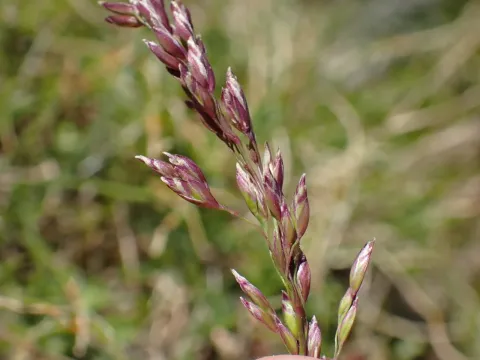
Bellardiochloa violacea
Bellardiochloa violacea
Bellardiochloa violacea is a perennial grass belonging to the Poaceae family. This species is widely recognized for its resilience in high-altitude environments, where it serves as a critical component of the mountain ecosystem's vegetation cover.
What the section contains
Bellardiochloa violacea
The plant originates from the mountainous regions of Central and Southern Europe. Its habitat is characterized by thin soils, significant slope gradients, and a climate that necessitates rapid growth during short, intense summer periods.
Climatically, this grass is adapted to low temperatures and high solar radiation. It thrives in alpine and subalpine zones, showing exceptional frost tolerance, which is essential for survival at altitudes where freezing temperatures can occur throughout the year.
Regarding soil requirements, it prefers light, stony, or rocky soils. It is highly efficient at extracting nutrients from poor soils and does not require complex fertilization programs. It thrives in well-drained conditions, avoiding locations with waterlogging that could lead to root decay.
In terms of agricultural use, Bellardiochloa violacea is primarily valued as natural forage. It provides essential grazing for sheep, goats, and cattle moved to mountain pastures during the summer months, contributing to the sustainability of traditional pastoral farming systems.
The health of Bellardiochloa violacea populations is primarily threatened by climatic instability. Prolonged periods of uncharacteristic moisture in the alpine zones facilitate the development of fungal infections, such as leaf rust, which can impact biomass production.
Insect pests, including various larvae that inhabit the soil, pose a threat to the root system. While these are rarely a major issue in wild settings, in managed mountain meadows, high populations of these pests can lead to significant thinning of the grass stand.
Overgrazing remains the most critical threat to the long-term viability of this grass. When the vegetative cover is depleted, the exposed soil is prone to erosion, and the weakened plants become significantly more susceptible to opportunistic pathogens and secondary diseases.
Mildew can occasionally appear on the leaves during damp, overcast summers. While it rarely results in total crop failure, it reduces the palatability of the grass for grazing livestock, potentially causing livestock to prefer other, less nutritious plant species.
Effective management includes implementing a rotational grazing schedule. By allowing the sward to recover after periods of high grazing pressure, the vigor of the plant is maintained, which acts as the best natural defense against pests and diseases.