
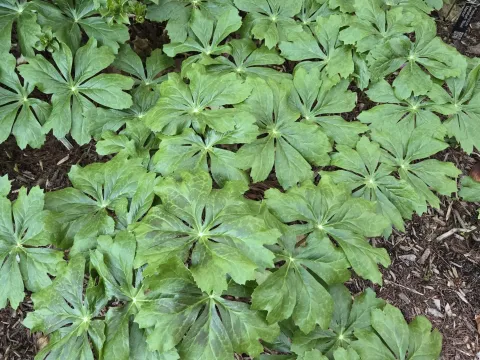
Podophyllum hybrid
Podophyllum hybrids
The Podophyllum hybrid, belonging to the Berberidaceae family, is a herbaceous perennial known for its distinctive foliage. Propagation is primarily achieved through rhizome division rather than seeds, which require long stratification periods to break dormancy.
What the section contains
Podophyllum hybrid
The best time for planting or dividing rhizomes is early spring, just before new shoots emerge, or in the late summer months. When dividing, ensure each segment possesses at least one or two vigorous growth buds to ensure successful establishment.
If sowing seeds, they must be fresh and sown immediately in autumn to experience winter cold. However, it may take several years for seedlings to reach a maturity level where they produce their characteristic ornamental leaves.
Planting depth should be shallow, usually between 5 and 10 centimeters, with the rhizome laid horizontally. Spacing should be approximately 45 centimeters apart to allow for the natural spread of the root system over time.
Choose locations that mimic the natural woodland floor environment, such as areas under deciduous trees. These sites provide the necessary dappled sunlight and protection from harsh midday heat that could scorch the leaves.
Podophyllum hybrids thrive in cool, moist, and nutrient-rich soils. A well-drained but humus-heavy substrate is essential for maintaining the vigor of the plant throughout the growing season.
Maintaining consistent soil moisture is critical, especially during the spring growth phase. Irrigation should be applied regularly during dry spells to prevent premature foliage wilting and die-back.
The ideal soil pH is slightly acidic. To improve heavy or depleted soils, gardeners should incorporate significant amounts of organic matter, such as leaf mold, compost, or decomposed bark, which creates a loose texture.
While hardy in most temperate climates, these plants benefit from a protective layer of mulch during the winter. This mulch helps regulate soil temperature and prevents the heaving of rhizomes during freezing and thawing cycles.
Fertilization should be done sparingly, using organic compost applied as a top dressing in early spring. Avoid heavy synthetic fertilizers, as they can cause excessive succulent growth that becomes prone to pest infestations.
Slugs and snails are the most significant pests for Podophyllum hybrids, particularly in wet spring conditions. They often feed on the emerging foliage, causing unsightly holes and potentially stunting the plant's growth.
Fungal diseases like leaf spot may occur if air circulation is poor or if the plants are situated in areas with high humidity and stagnant air. Proper spacing is essential to reduce the risk of infection.
Root rot is a common issue resulting from overwatering or poorly drained planting sites. If the leaves yellow prematurely, it is a sign to check soil moisture and improve drainage conditions immediately.
To maintain a healthy patch, gardeners should perform regular sanitation by removing dead foliage and debris in the autumn. This reduces the habitat for overwintering pests and fungal spores.
Chemical treatments should be used as a last resort, as the plant can be sensitive to certain concentrations of pesticides and fungicides. Biological controls and manual pest removal are usually sufficient for small to medium garden patches.