
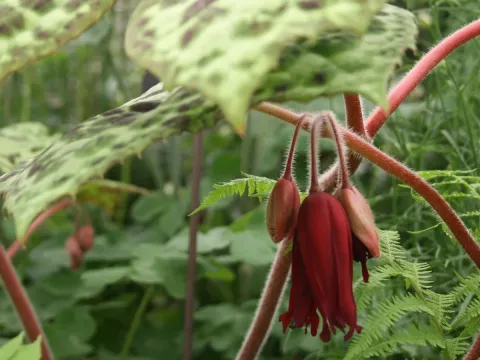
Podophyllum versipelle
Podophyllum versipelle
Propagation of Podophyllum versipelle in commercial or ornamental settings is primarily achieved through vegetative division of rhizomes during the autumn season. The optimal timing for this procedure is late September or October, when the plant enters its dormancy phase.
What the section contains
Podophyllum versipelle
Seed propagation is less common due to the plant's long stratification requirement, which necessitates 3-4 months under cool conditions. Seeds should ideally be sown outdoors in the autumn or in specialized trays with light, airy substrate.
When grown from seed, germination is often uneven and may take up to two years to emerge, requiring high standards of land management and consistent soil moisture maintenance.
Sowing depth should not exceed 1.5–2 centimeters to ensure optimal embryo development and prevent the seedling bed from drying out prematurely.
It is essential to select planting sites that are protected from direct afternoon sun, as the crop is highly sensitive to moisture loss in the topsoil during its early developmental stages.
Podophyllum versipelle, a member of the Berberidaceae family, is a shade-loving perennial that requires environmental conditions similar to temperate forest ecosystems to thrive.
The crop prefers deep, well-cultivated, loose, and humus-rich soils with an acidic or slightly acidic pH, which facilitates the development of a robust root system.
The plant has high moisture requirements; however, it cannot tolerate waterlogging, so drainage systems are necessary in areas with high water tables.
In its native range, covering various Chinese regions, the plant grows in temperate and subtropical climates, favoring locations sheltered from high winds and excessive heat.
Agronomic maintenance includes regular mulching of the soil with organic matter or leaf litter, which helps retain moisture and simulates the natural forest floor environment.
The economic value of this crop lies in the accumulation of biologically active substances, specifically lignans such as podophyllotoxin, which are critical for the pharmaceutical industry.
The yield of raw material depends directly on the age of the plantation; it is recommended to harvest rhizomes at 4-5 years of age when the concentration of active compounds peaks.
The biomass of the aerial parts may also be of interest, but the primary pharmacological activity is concentrated in the rhizomes, which are the main focus of industrial harvesting.
With intensive care and proper crop rotation, growers can achieve stable root mass increases by applying organic fertilizers during the active growing season.
Plantation efficiency is measured by the content of targeted alkaloids per unit area, necessitating regular laboratory monitoring to ensure the quality of the harvested material.
Slugs and snails are the primary pests for this crop, as they can cause significant damage to young leaves and growing tips, particularly during wet seasons, thereby slowing overall growth.
Under conditions of excessive moisture and poor soil aeration, Podophyllum is susceptible to fungal diseases such as rhizome rot and various types of leaf spot.
Disease prevention involves maintaining optimal plant density to ensure proper air circulation and prevent excess moisture from accumulating on the foliage.
If initial signs of infection are detected, the use of biological fungicides is recommended, as the plant is sensitive to harsh chemicals due to its medicinal application.
Pests can act as vectors for viral infections; therefore, controlling insect and mollusk populations is a mandatory element of agronomy to maintain plantation health.
Harvesting of rhizomes is performed during the plant's physiological dormancy—typically in autumn, as the aerial parts begin to wither and lose turgor naturally.
Rhizomes are carefully lifted from the soil, cleaned of dirt and root residues, and then thoroughly washed in running water to remove impurities.
For further processing, the raw material is dried at controlled temperatures (not exceeding 45-50 degrees Celsius) to ensure the stability of the active pharmaceutical ingredients.
It is important to keep the drying material away from direct sunlight, as exposure can lead to the degradation of sensitive organic compounds.
Storing the finished dry raw material should be done in dry, well-ventilated rooms using airtight containers to prevent moisture re-absorption and mold development.