
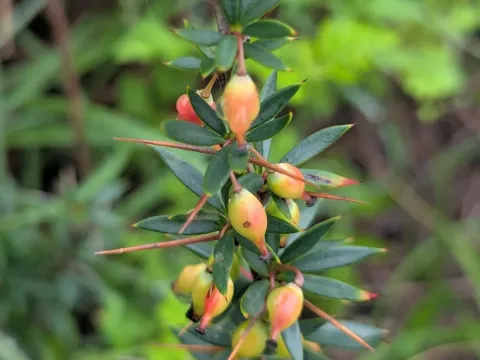
Berberis mucrifolia
Berberis mucrifolia
Berberis mucrifolia is an ornamental shrub belonging to the Berberidaceae family. It is valued for its unique foliage and compact growth habit, making it a popular choice for both residential landscapes and commercial garden designs.
What the section contains
Berberis mucrifolia
The plant thrives in full sun, which is essential for developing vibrant leaf coloration. While it possesses some degree of shade tolerance, placement in direct sunlight ensures the densest foliage and the most robust physiological development throughout the season.
Regarding soil requirements, Berberis mucrifolia performs best in well-drained, fertile soil types. It is moderately adaptable to various soil structures, but proper drainage is critical to prevent root-related issues during periods of high precipitation.
Water management is crucial during the plant's establishment phase. Once mature, the shrub exhibits significant drought tolerance, making it an excellent candidate for xeriscaping or low-maintenance garden projects in temperate climates.
Routine maintenance includes regular pruning to maintain the desired shape and size. As the plant responds exceptionally well to shearing, it can be easily trained into formal hedges, providing both a structural element and a natural barrier in the garden.
Powdery mildew and rust are among the primary fungal threats to this species. Preventive measures include ensuring proper plant spacing to facilitate airflow and applying copper-based fungicides when environmental conditions favor disease development.
Aphid infestations are a common concern, particularly on tender new growth during the spring months. Monitoring for curling leaves is the first step, followed by the application of horticultural oils or systemic insecticides if the population exceeds the economic threshold.
Larvae of various moth species can cause significant defoliation if left unchecked. Integrated pest management (IPM) practices, such as manually removing nests and encouraging local predatory insects, help keep these populations at manageable levels.
Good sanitation practices, including the removal of fallen leaves at the end of the growing season, are essential for reducing overwintering habitats for both pests and pathogens. This simple step significantly reduces the need for chemical intervention.
Vigorous growth requires periodic thinning of older branches to keep the interior of the shrub healthy. This practice minimizes humidity trapped within the center of the plant, which is often the starting point for various opportunistic fungal infections.